Permits for demolition in Cape Coral
The City of Cape Coral's demolition guideline covers removing any structure on a residential property other than the whole home, such as a shed, a pool deck or an addition. That permit is a Building Miscellaneous Demo application on the city's online portal. A general, building or residential contractor, a demolition specialty contractor or an owner-builder can apply. You need a site plan for exterior work and the burrowing owl and gopher tortoise affidavit; a Notice of Commencement, FEMA paperwork or an eagle management affidavit may apply depending on the job.
For tearing down a whole house, the guideline sends you to the city's Land Development division. Ask them and the Building Division what your structure needs before work starts, including utility disconnects and whether an asbestos survey applies. Taking out a pool adds a Pool Abandonment inspection. We work to the permit the owner or builder pulls. Our demolition permit guide compares Cape Coral, Fort Myers and Lee County.
Slabs, pool decks and concrete removal
Concrete is the heavy part of most demolition. We break slabs, pool decks, patios and old driveways into pieces a truck can carry and load them out. Where only part of a slab is coming out, we cut the line clean so what stays is not cracked or undermined. If a new drive is going in, we can cut and base it right after; see driveways and base rock.
Concrete does not go out with yard waste. After Hurricane Milton, Lee County said concrete was not eligible for county pickup and told contractors to bring debris to an approved disposal facility. Our haul-off covers that, so the concrete leaves the lot with us and nothing ends up in the swale or on the lot next door.
Before we dig: owls, tortoises and buried lines
A demolition site is still a Cape Coral lot. Burrowing owls nest February 15 to July 10, and the city wants a 33 foot buffer around a burrow in that season and 10 feet the rest of the year. Gopher tortoise burrows need 25 feet all year. Burrows on your lot, the right-of-way or a vacant lot next door belong on the affidavit.
Florida law requires a call to Sunshine 811 at least two full business days before any excavation or demolition. We make that call and wait for the marks. Older homes may also have a septic tank; if the lot is moving to city sewer or getting a new build, the tank is handled under its own permit. Our septic excavation page covers the dig for a tank abandonment.
What the lot looks like when we leave
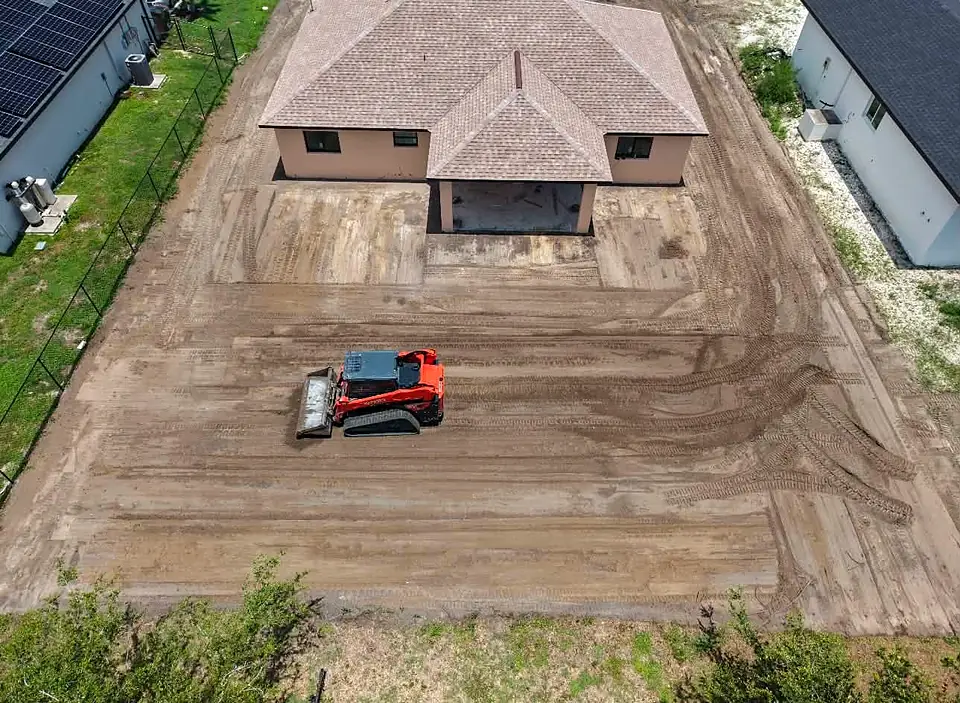
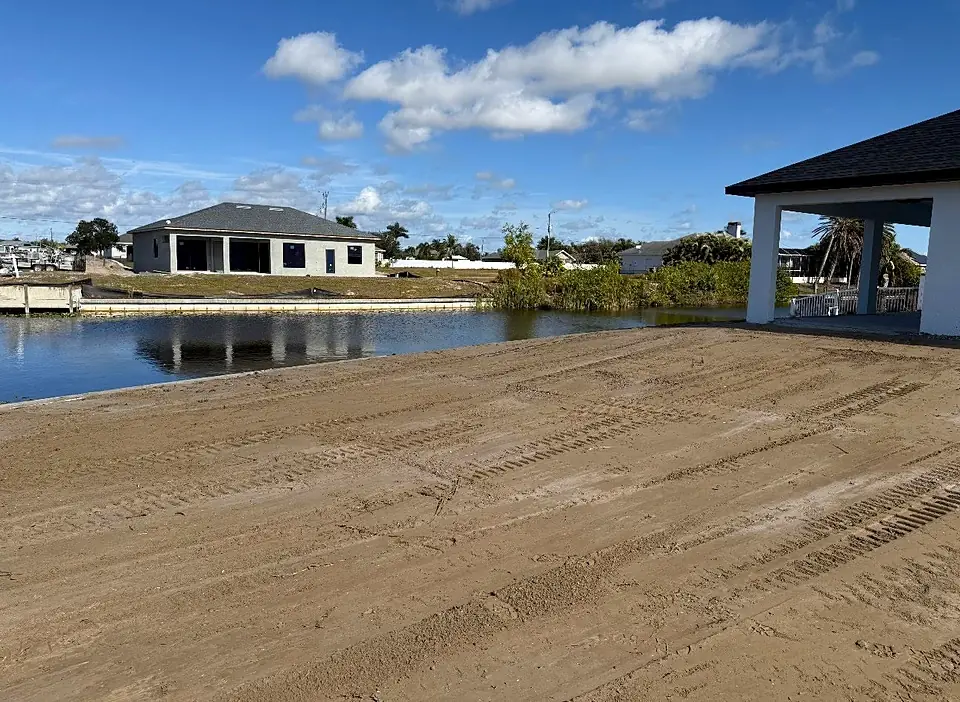
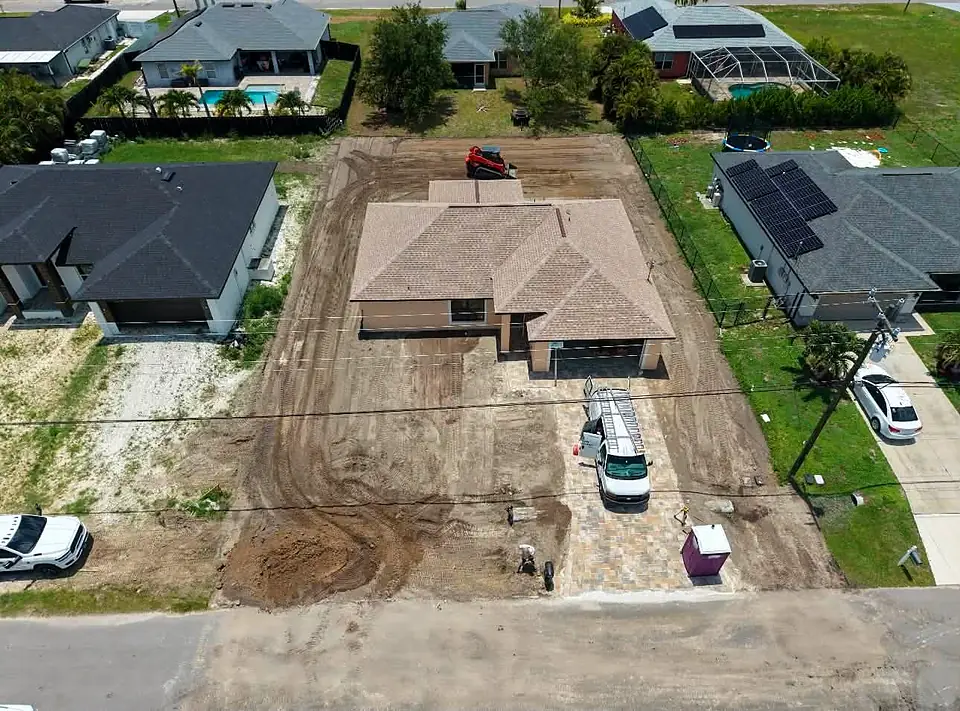
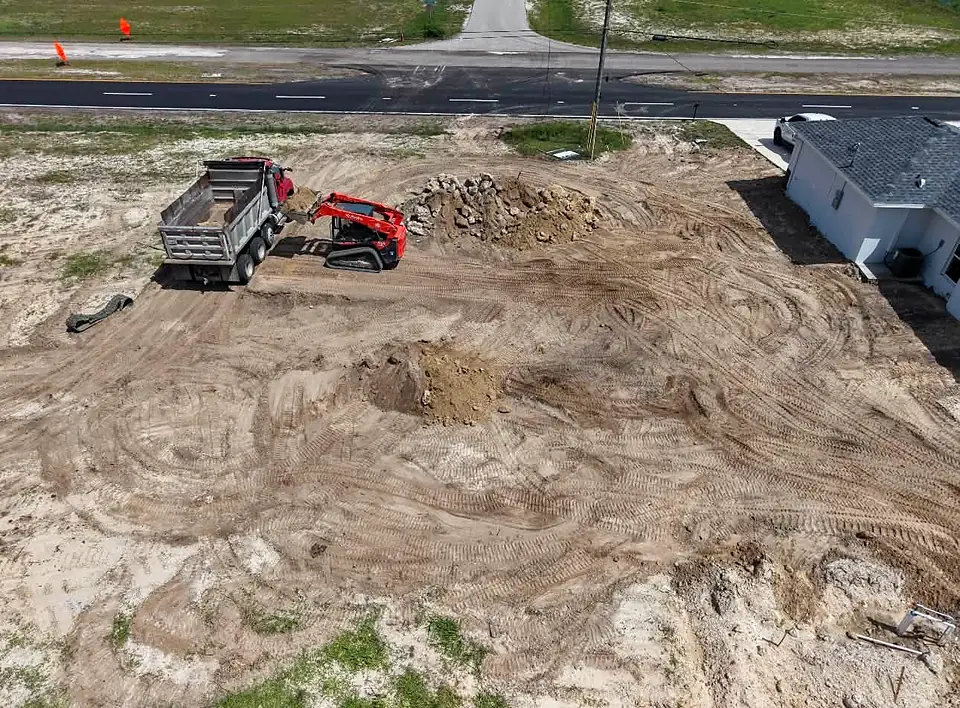
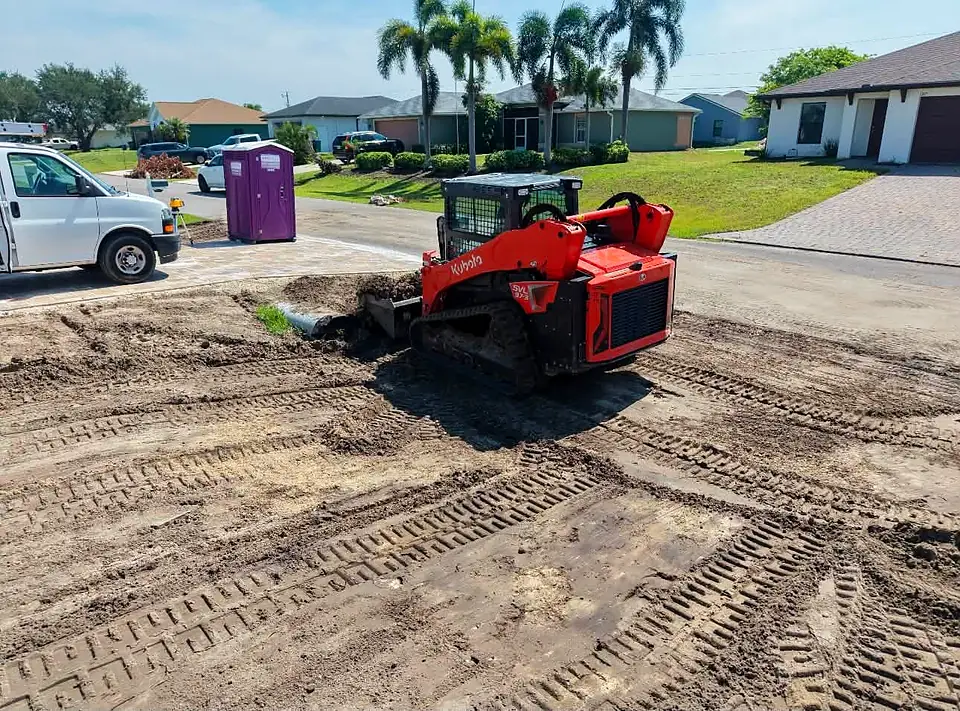
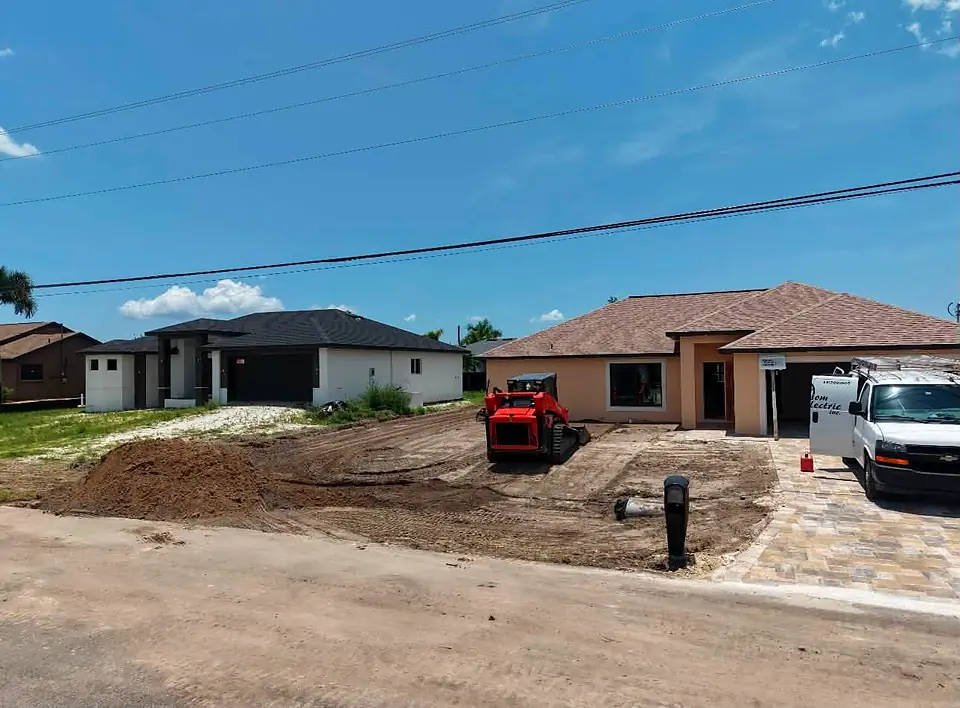
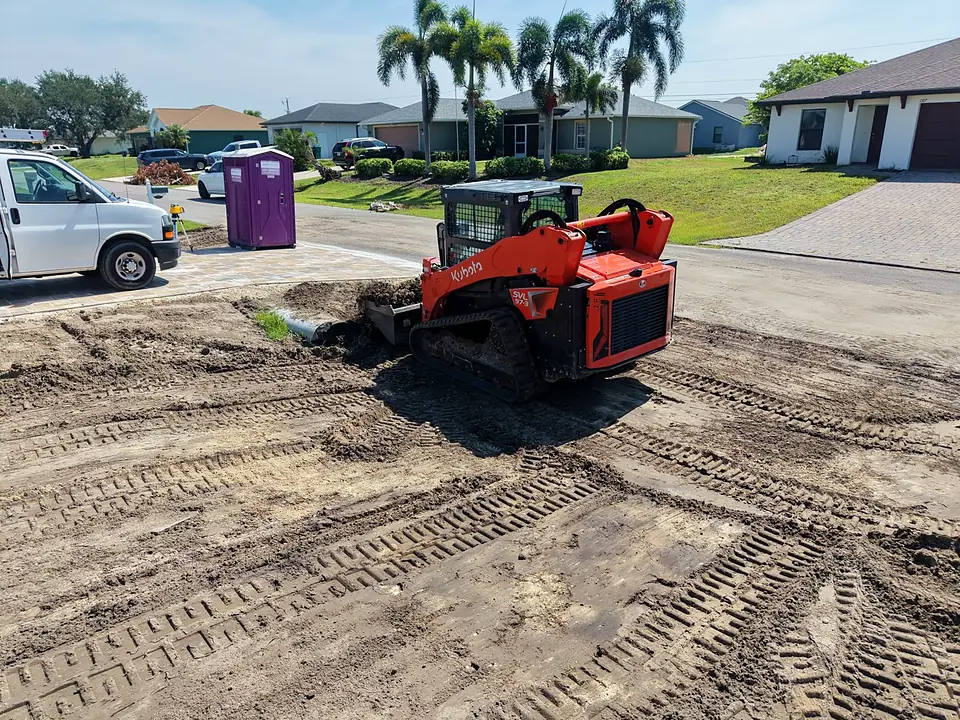
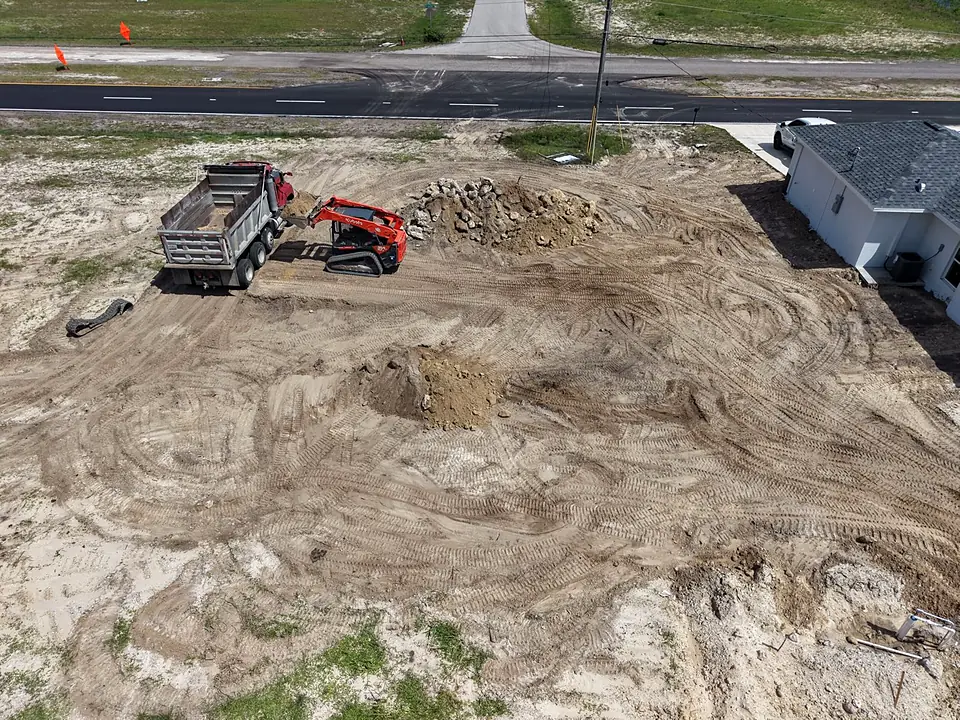
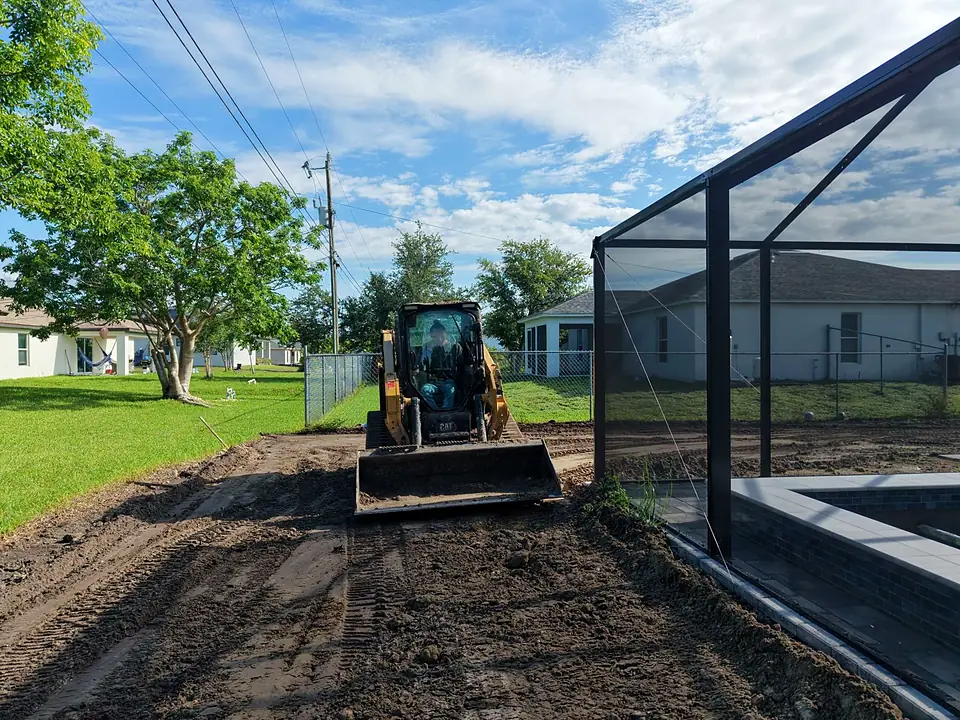
When the last truck pulls out, the debris is gone, holes are backfilled and the ground is rough graded so it drains instead of ponding. Footings and buried concrete we turn up get pulled. If a new house is next, the lot is ready for the surveyor and the fill. If it is staying empty, it is ready for seed or sod.
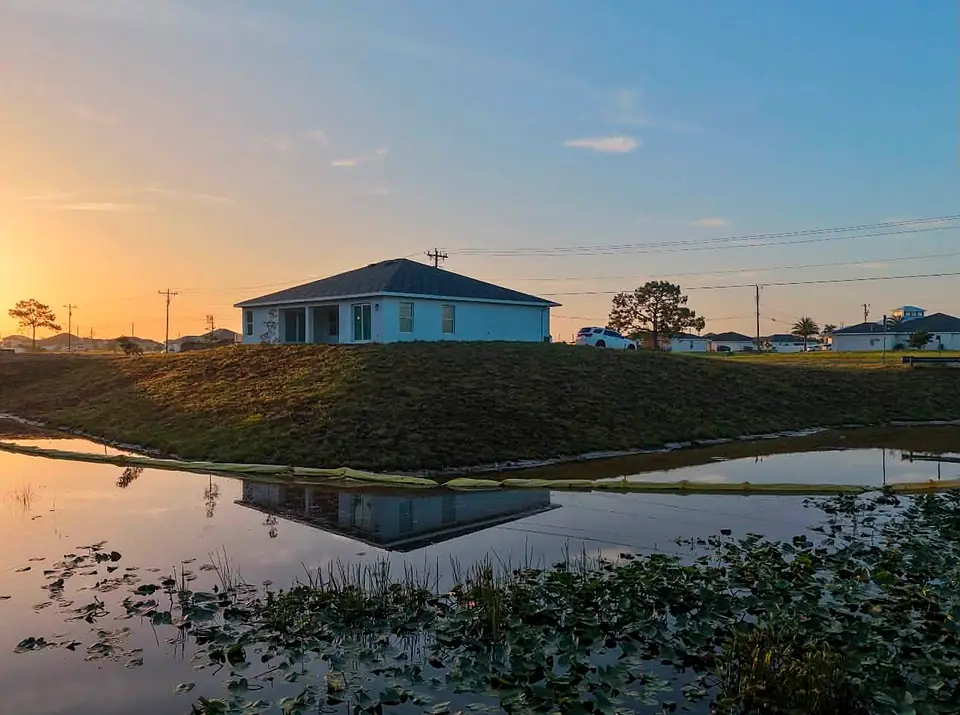
For a new build, demolition rolls straight into site prep. Hire a demolition contractor who also does the site work, and the same machines can bring in fill, build the pad and come back for final grade on the same lot, so you have one contact for the dirt from start to finish. That side of the job is on our site grading and final grade page.
Storm-damaged structures
After a storm, a wrecked shed, lanai slab or carport is the owner's to remove. FEMA's position is that debris removal from private property stays the property owner's responsibility, outside of specially approved programs. County crews pick up storm debris that residents place in the right-of-way, but they will not come onto your property to get it.
We take down what is left of a damaged structure, sort and haul the debris and leave the lot safe to walk. For downed trees and yard debris, see our storm cleanup and debris hauling page.