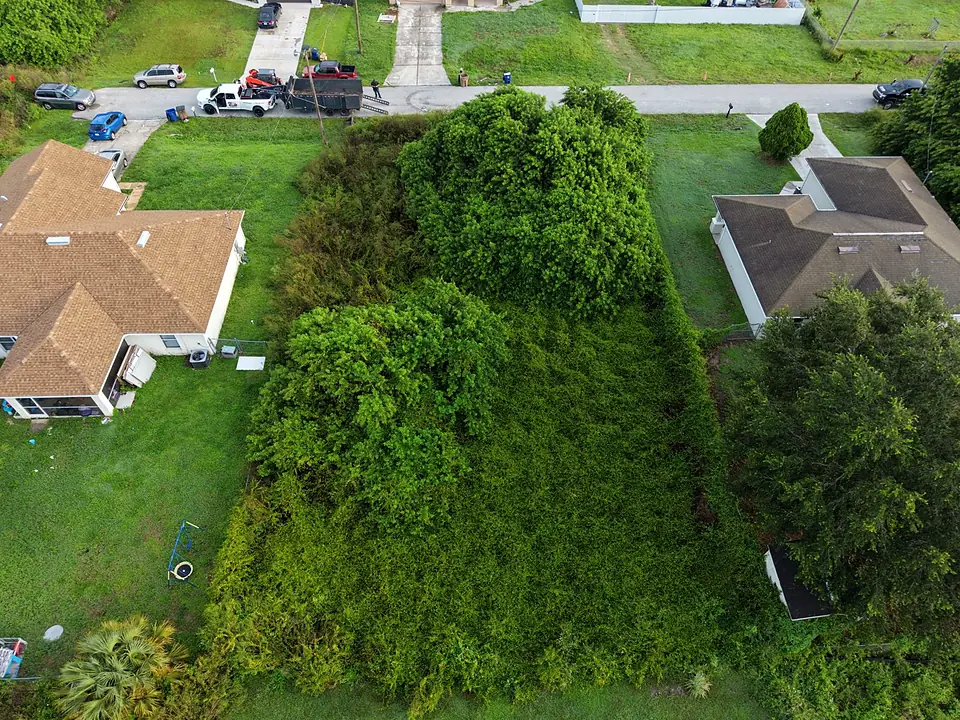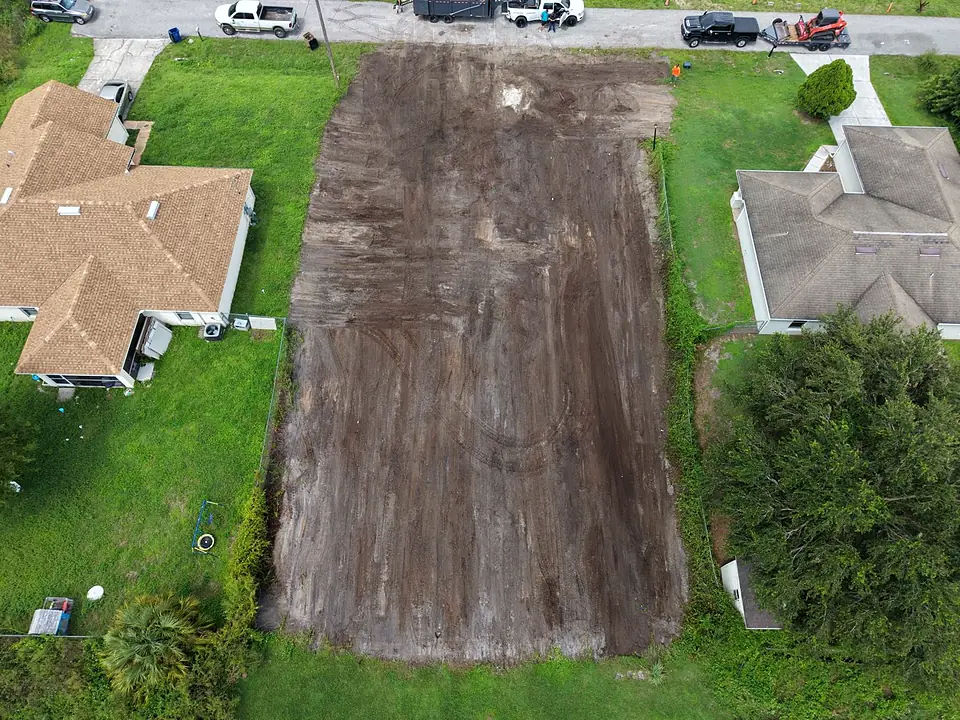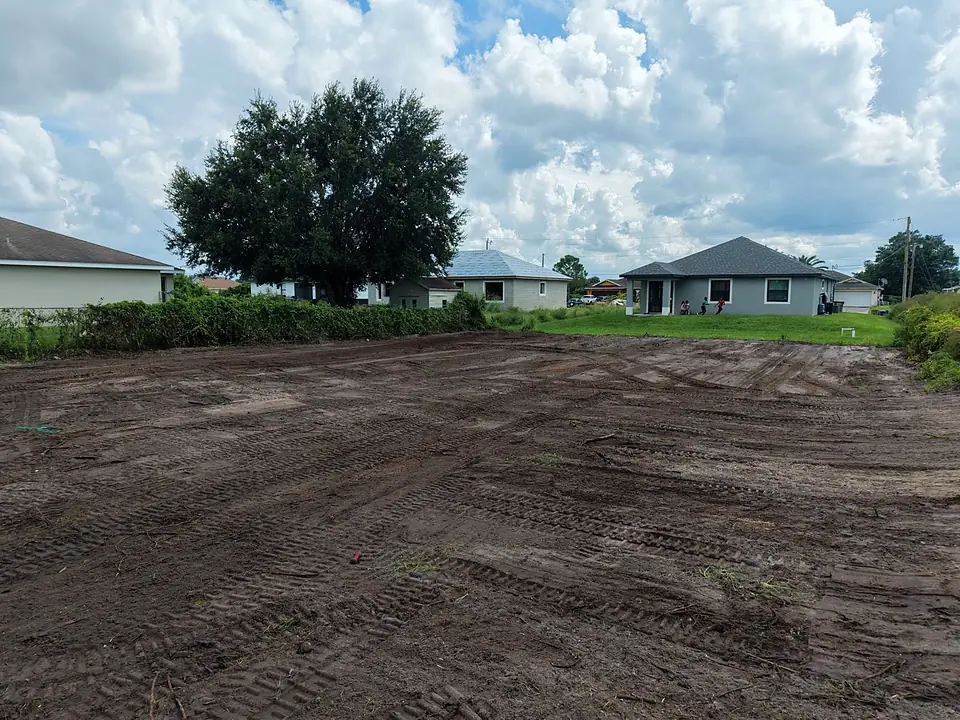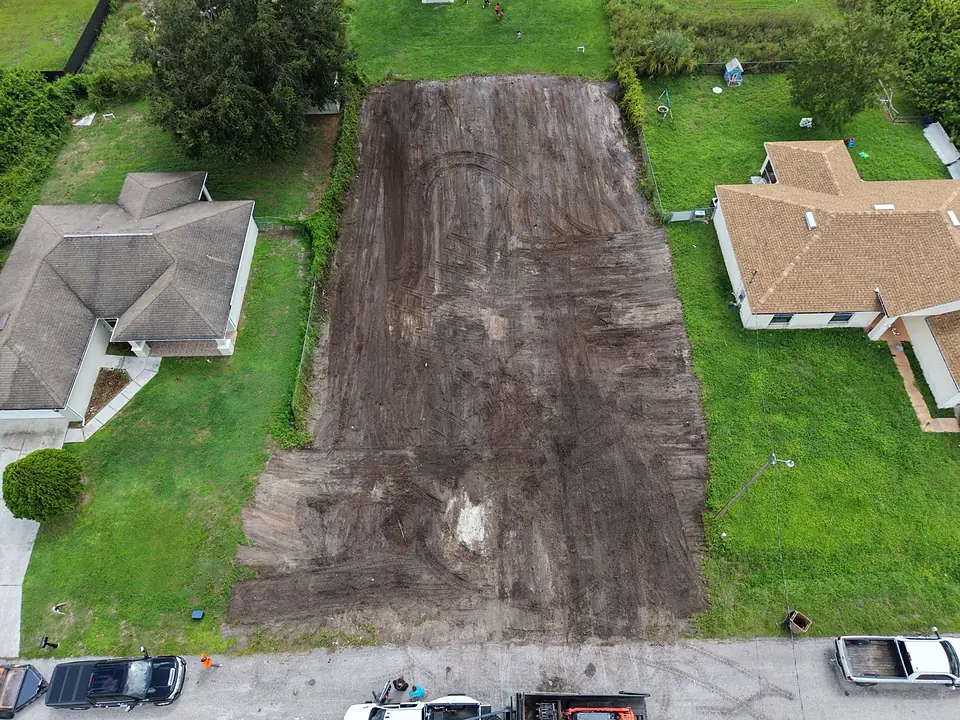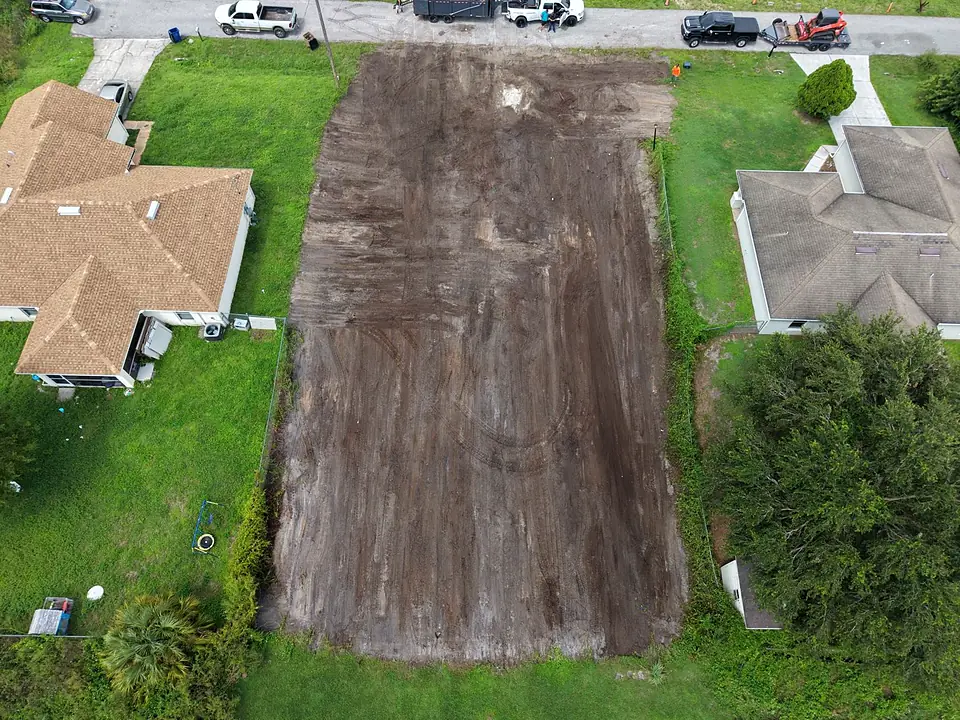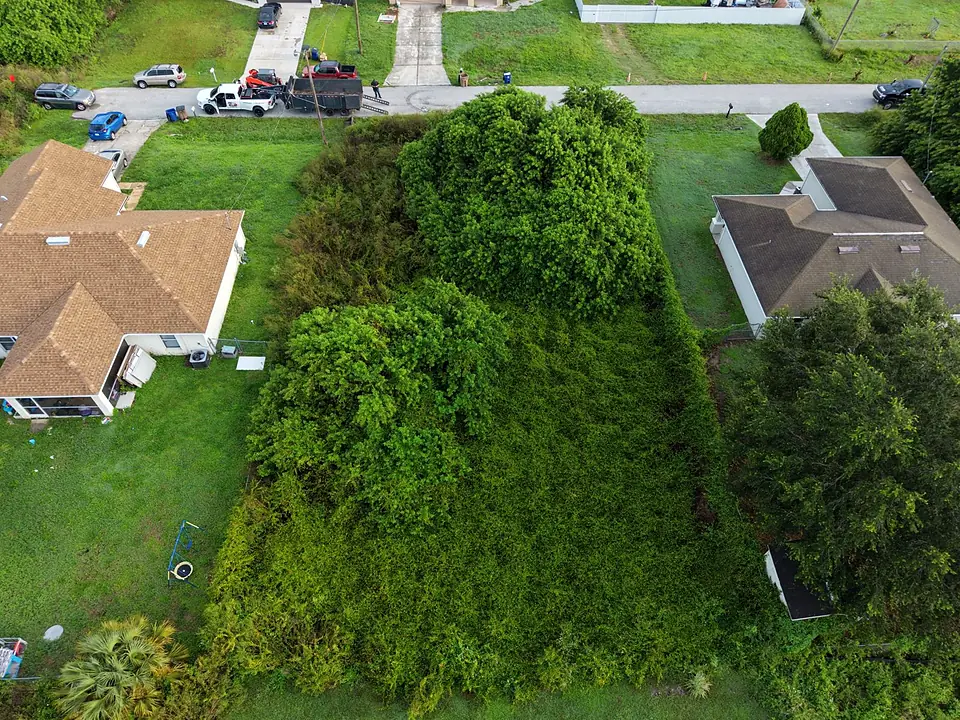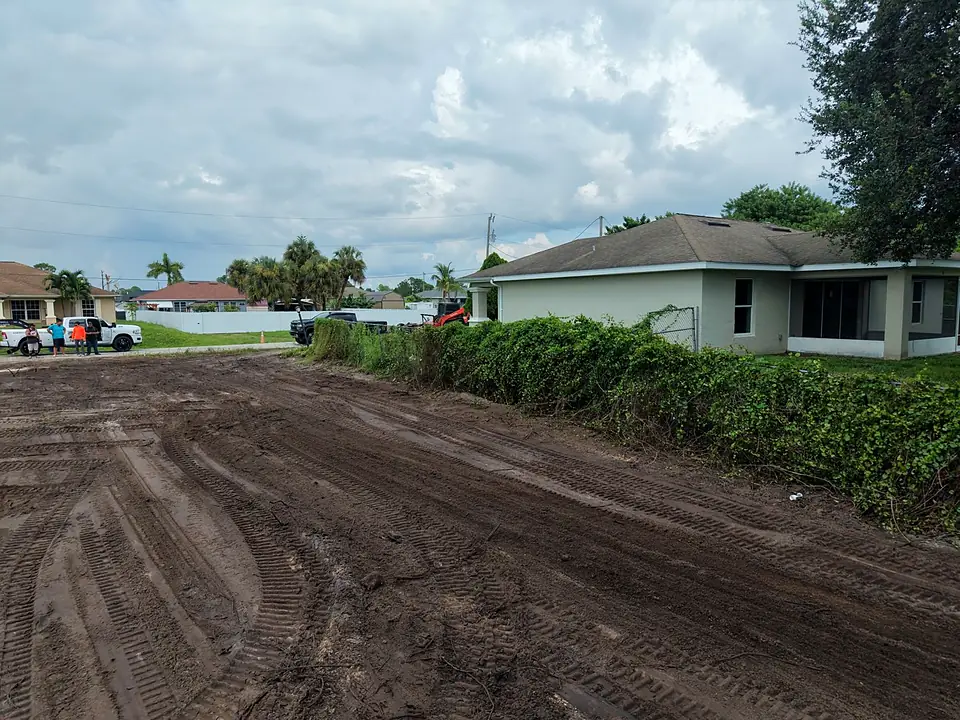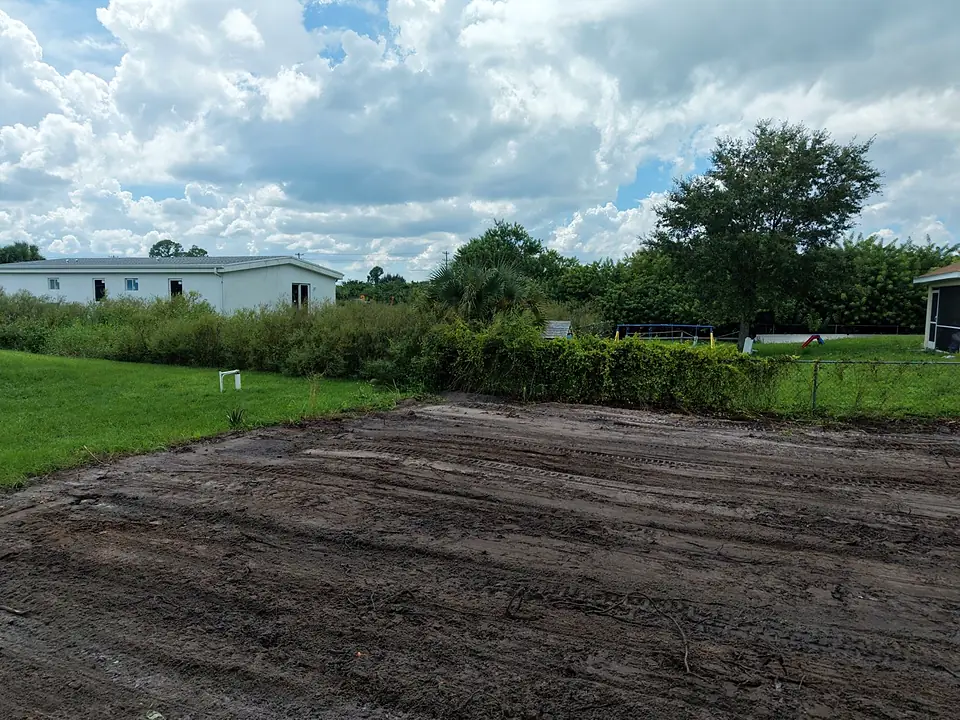
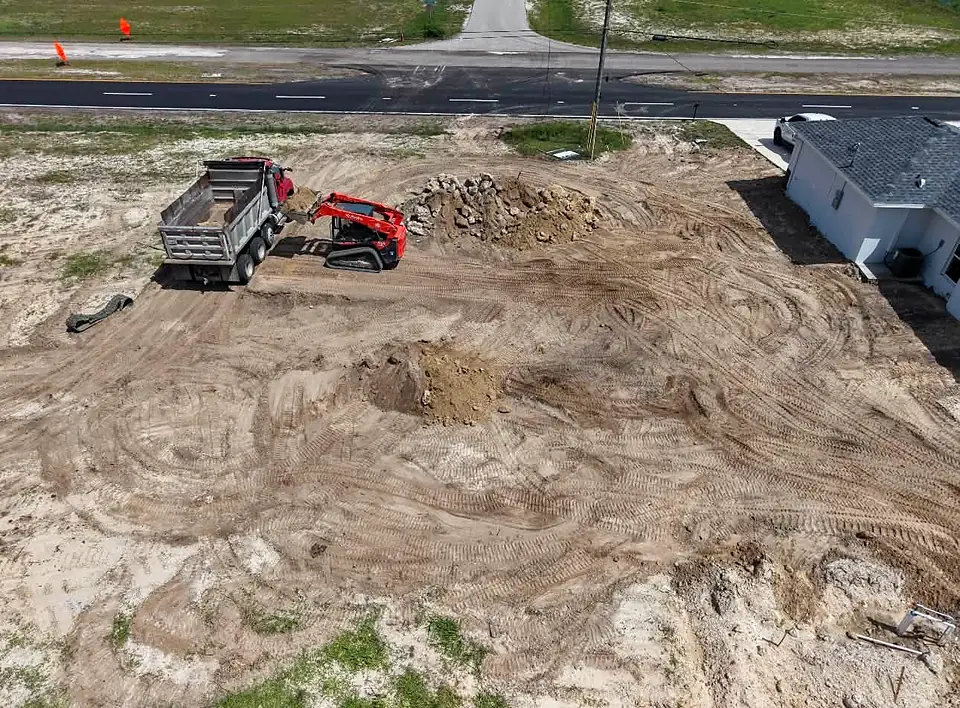
What a house pad costs in Lehigh Acres
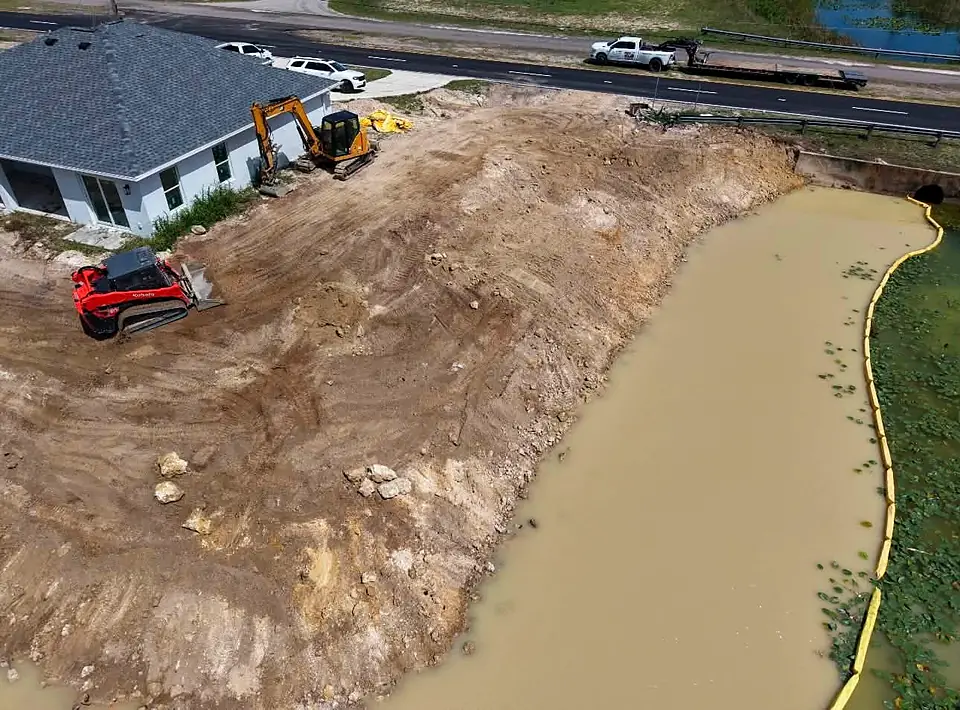
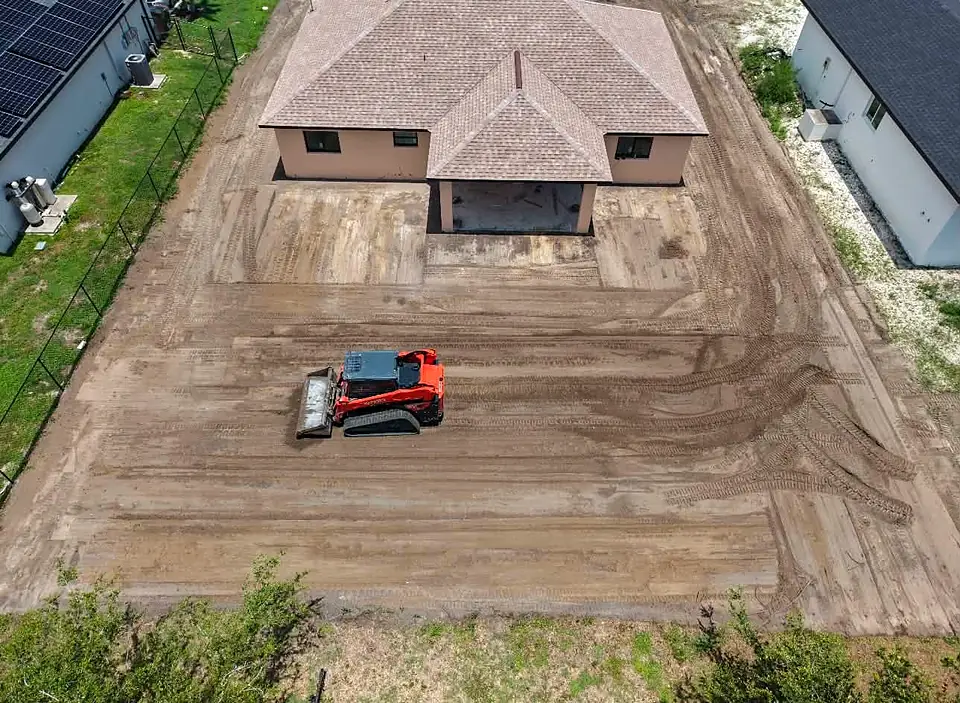
Most house pads run $700 to $1,500, depending on the size of the pad. Fill dirt runs $250 to $350 a load, depending on where the lot is and how far it is from the pit. The number of loads depends on how far the lot has to come up, which is why we ask for the survey and site plan first.
Compare quotes on the same items: pad size and height, loads of fill, clearing, compaction and grading. Those are Chop's own ranges. Your exact price comes after he sees the lot, and the quote is free: call or text (239) 560-2996.
Stem wall or mono slab on a Lehigh lot
Most pad conversations in Lehigh come down to foundation type. A monolithic slab sits on a compacted fill pad built up close to floor height, so it takes more fill and more of that fill ends up outside the footprint as side slope. A stem wall foundation gets its height from block, and the inside is filled after the walls are poured. Your builder picks based on flood zone, how far above the road the floor has to be, and cost. Our stem wall vs monolithic slab guide lays out the tradeoffs from the dirt side.
Either way, watch the 18-inch line. A tall mono pad on a low lot can push final grade past 18 inches above the road crown or the house next door, and then the site fill grading plan is required. Better to catch that on the plans than from a permit reviewer's comments.
What the builder needs from the pad
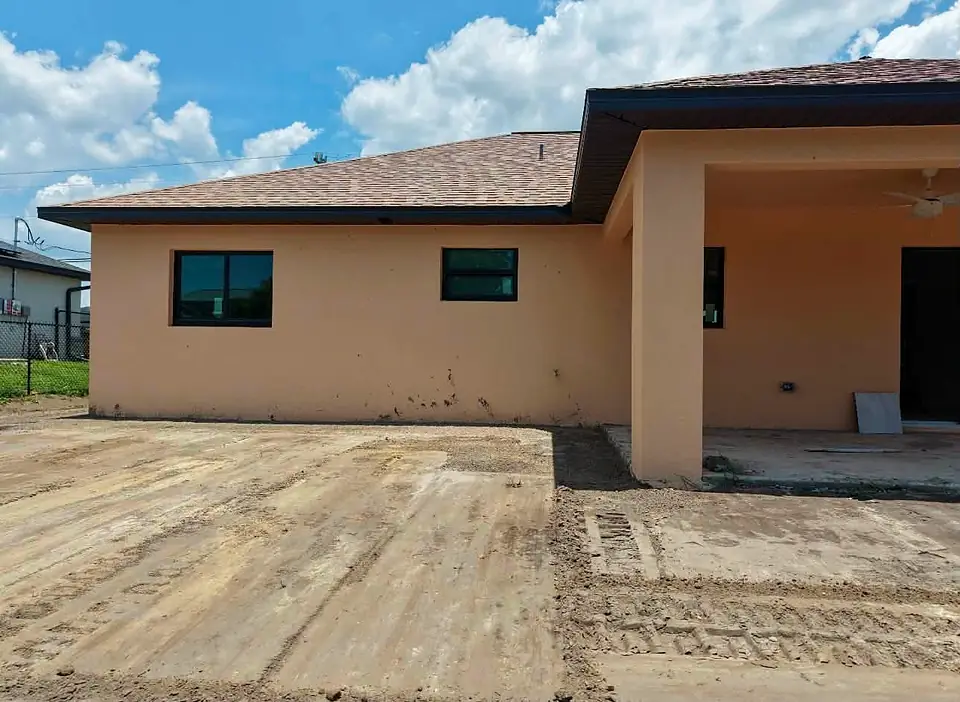
Builders need three things from us. The pad at plan elevation, checked against the surveyor's stakes, not eyeballed. Compaction, because fill dumped and tracked once will fail the density test and settle under the slab, so we place it in lifts and compact each one. And timing: the pad ready when the form crew shows up, and the backfill done after the stem wall pour so plumbing and the slab can follow.
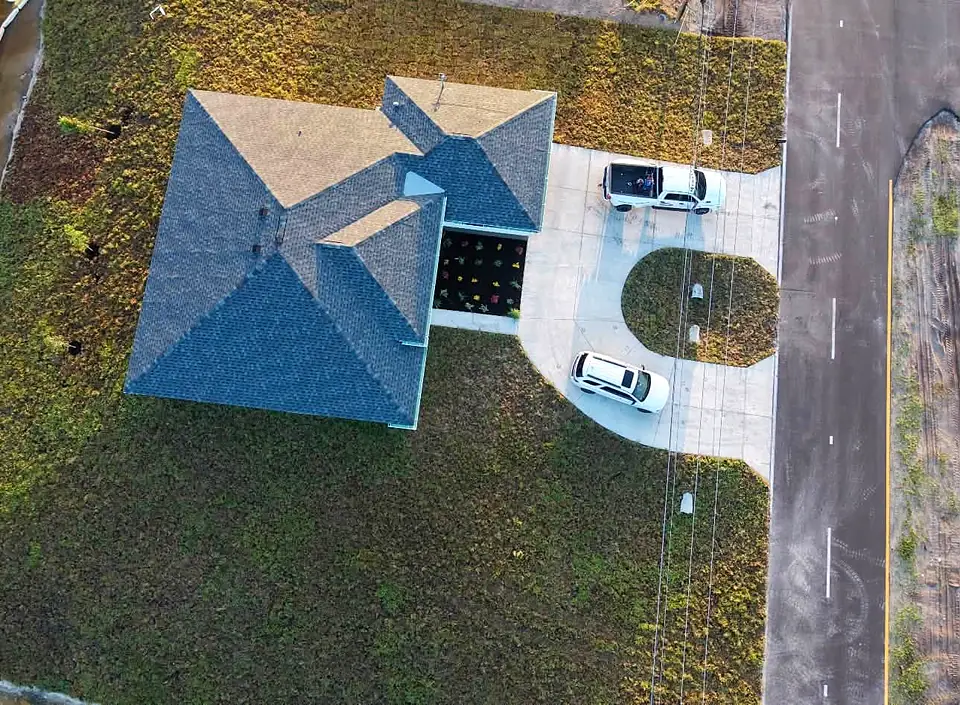
At the end, the lot needs final grade for the certificate of occupancy: water moving away from the foundation, side yards that drain, and a front that ties into the swale. We come back for that and leave the final grade ready for sod.
Drainage, flowways and the LA-MSID
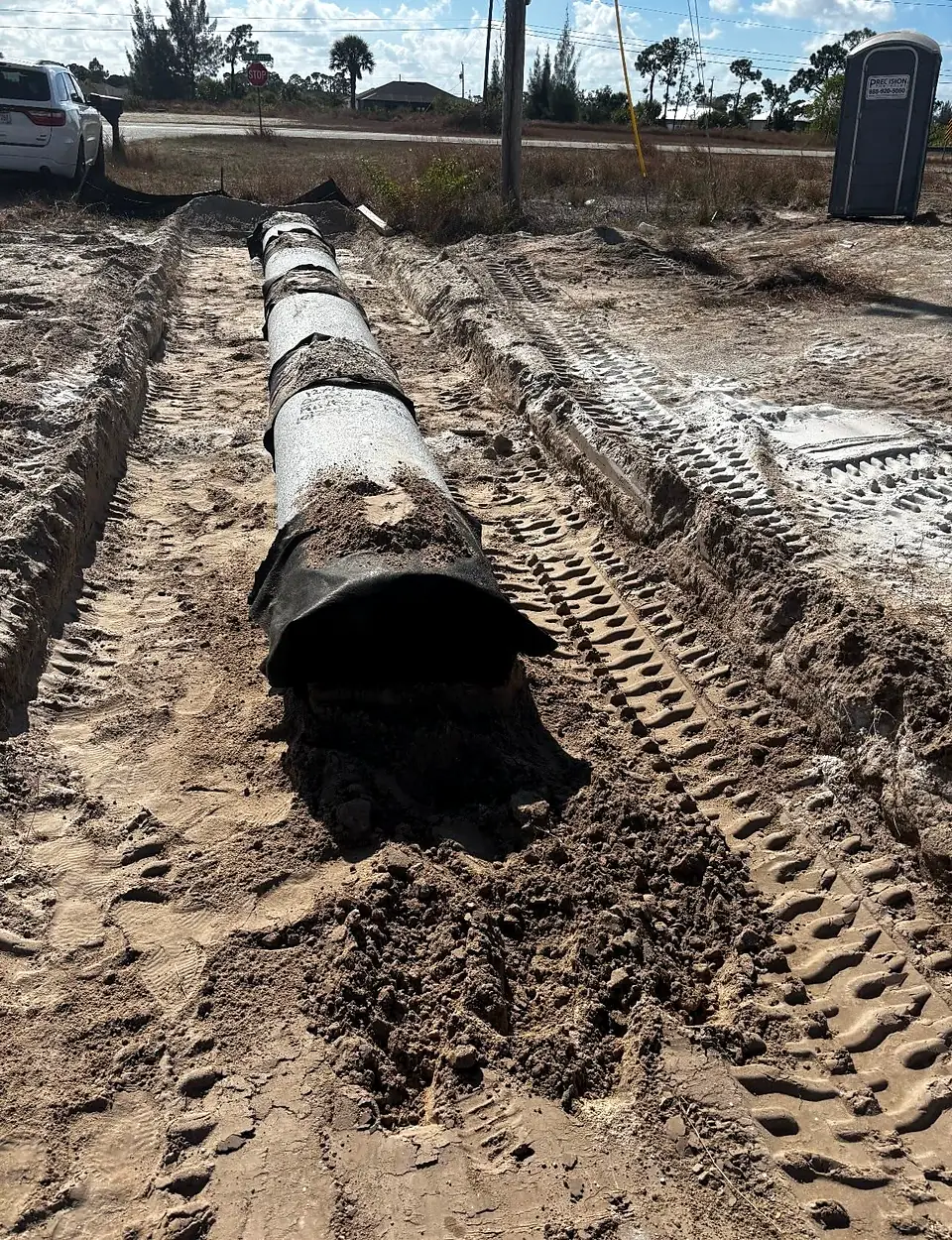
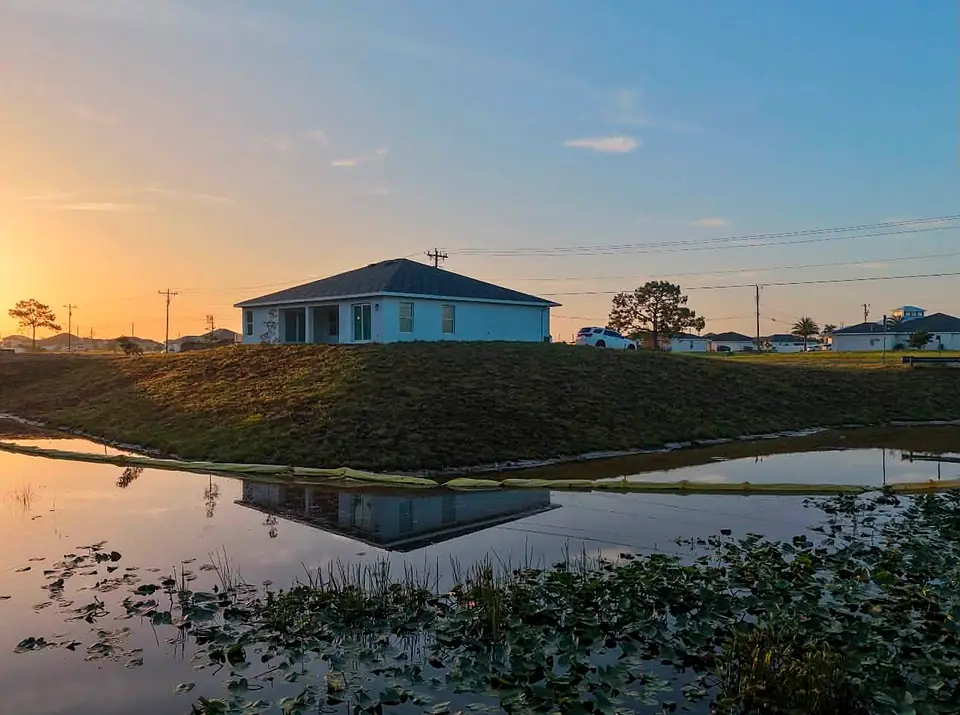
Lehigh drains through the Lehigh Acres Municipal Services Improvement District's canal system, 311 miles of it at the district's last published count. Lee County's flood brochure notes that state law and county ordinances prohibit private property owners from filling, diverting or otherwise blocking natural flowways. A lot filled high without a thought for the neighbors is how drainage complaints start, so we shape the pad and the yard to send water where the plan sends it.
The district also requires its own permit for single-family parcels over one acre, and for anything that connects to, crosses or sits on its canals and drainage facilities. Most quarter and half acre lots fall under that size, but if yours is bigger or the plan touches a district canal, call the LA-MSID before fill shows up. More on working out east is on our Lehigh Acres page.
How much fill a Lehigh pad takes
There is no single number. It depends on how low the lot sits against the road crown, the pad size, the foundation type, and how much the fill tightens up under compaction. The survey gives us the depth and the house plan gives us the footprint and slopes, and we figure the loads from there. Our fill dirt guide shows the basic math if you want to check it yourself, and the Lehigh Acres lot guide covers the whole build in order.