
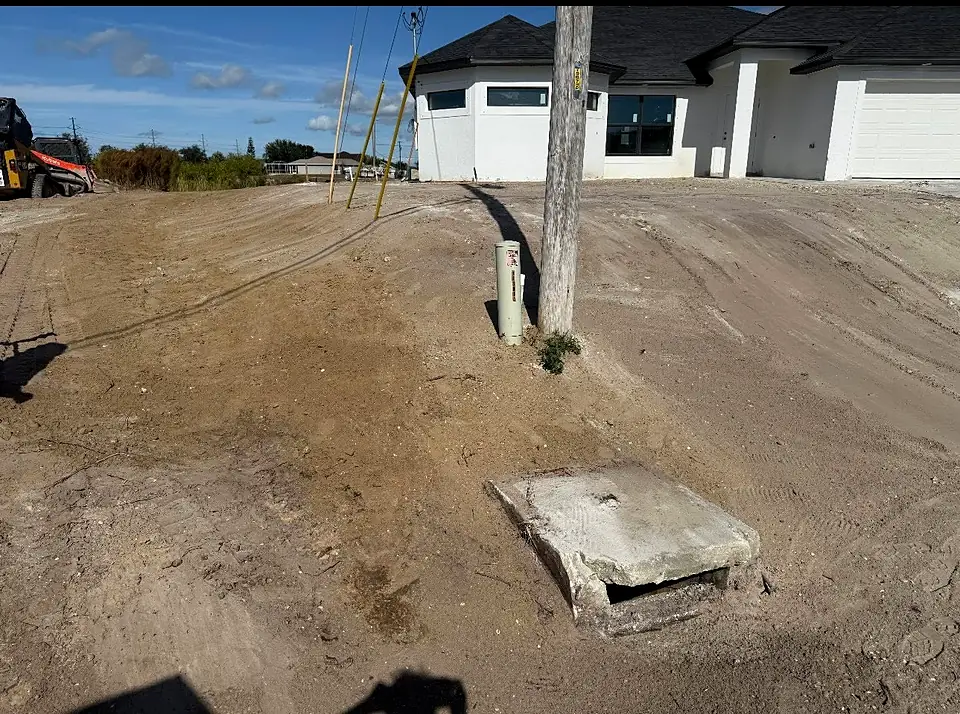
What the UEP means for a home on septic
The Utilities Extension Project is the city's program for running water and sewer lines into neighborhoods still on wells and septic, paid for by assessments on the properties that benefit. When your area is done, the city sends a Notice of Availability. The city's UEP pages say developed properties must connect within 180 days of the date on that notice, and undeveloped parcels must connect before a certificate of occupancy.
Once the house is on sewer, the septic tank is out of service for good. The city's answer to whether tanks must be removed is that they do not have to be removed, but they must be collapsed and abandoned. Water wells can stay, though whether you can keep using one for irrigation depends on your UEP area. People building in an area scheduled for the next phase sign a hold harmless agreement and connect later when service arrives.
Who permits what
Several offices touch one abandonment. The city's UEP page says the plumber applies for the connection permit and, when needed, the septic abandonment permit through the city's Permitting Division, and submits a Department of Health septic abandonment form with it. The septic abandonment permit fee is $100, and the city lists it with the other fees to be paid before connecting. The Health Department performs the septic abandonment inspection, and the city handles the water, sewer and irrigation inspections and the meter.
Behind that sits the state rule. Florida moved the onsite sewage program from the Department of Health to the Department of Environmental Protection effective July 1, 2021, and county health department staff still carry it out locally. Rule 62-6.011 says a system that stops being used after a sewer connection must be abandoned within 90 days. Fees and steps change, so confirm yours with the UEP line at 833-CAPE-UEP.
Who is allowed to do the tank work
This part matters. The Lee County health department's abandonment page says the tank work can only be done by the owner, if the owner lives in the home, a licensed septic installer, or a licensed plumbing contractor. The city's UEP answers add that the demolition contractor must be licensed unless the property owner does the work. Pumping must be done by a licensed septage hauler, and the receipt gets posted with the permit.
So the permit holder is responsible for the abandonment, usually your plumber, sometimes you as an owner living in the house. Where we come in is the machine work that permit holder needs: exposing the tank, breaking it so it cannot hold water, bringing in clean sand, backfilling and grading, done to the permit and with the permit holder directing the job. Our septic excavation page covers that work.
What the dig actually involves
First comes a Sunshine 811 locate request at least two full business days before digging, since new water and sewer laterals and other lines often run close to the old tank. The Health Department requires the tank to be pumped out before it is demolished, so the septage hauler comes before the machine.
With the tank empty, we dig down to expose the top. The state rule says the bottom must be opened or ruptured, or the whole tank collapsed, so it can no longer hold water. Then the tank is filled with clean sand or other suitable material and covered with soil. The Lee County health department's steps finish with grading and staking the site, sending in the pump-out receipt, and calling for the inspection. The abandonment steps focus on the tank, and the city treats any leftover equipment as the owner's to deal with.
What the yard looks like afterward
Expect a patch of fresh sand where the tank was, a trench line where the plumber ran the new sewer lateral to the street, and tracks along the route the machine used to get in. Tanks often sit close to the house, a driveway or a lanai, so access through a side yard and around fences and irrigation lines is part of planning the job.
Fresh backfill can settle a bit after the first heavy rains, so the area may need to be topped off and dressed before the grass goes back. The city's UEP page says the plumber restores the right-of-way after the connection. Restoring the rest of your yard is up to you, and new sod laid over a well-compacted, graded patch is the usual finish.
A real Cape Coral abandonment job
One of our Facebook reviews comes from exactly this kind of job. Luke Rodrigues was abandoning a septic tank under Cape Coral city rules as an owner-builder and had pulled the permits himself. He hired Chop for the excavation. He wrote that Chop picked up the call while working on another job, was understanding when Luke had to reschedule, showed up on time, did the dig, and helped with some extra small jobs while he was there. In Luke's words, Chop “SHOWED UP and SHOWED OUT.”
That is the job in a nutshell: the permit holder owns the process, and we show up when scheduled and do the machine work right.
Planning the abandonment
Start when the Notice of Availability arrives, not near the end of the 180 days. Line up the plumber first, since they pull the permits and set the order of work. Then schedule the pump-out and the excavation around the plumber's connection and the inspections. The city's UEP pages also mention that income-eligible homeowners may qualify for a grant toward the lines, septic abandonment and meter fees, so ask about it early.
If you need the excavation, backfill and grading done, call Chop at (239) 560-2996, or (305) 506-7420 for Spanish, or use our contact page for a free quote. If you are building on a lot in a UEP area, our guide to building on a Cape Coral lot covers the rest of the site work.
The short version
- Cape Coral gives UEP homes 180 days from the Notice of Availability to connect to city sewer.
- The old tank stays in the ground but must be pumped, collapsed or broken, and filled with clean sand.
- The septic abandonment permit fee is $100, and the Health Department does the inspection.
- The tank work is limited to an owner living in the home, a licensed septic installer or a licensed plumber.
- An excavation contractor handles the dig, backfill and grading under the permit holder's direction.
Quick answers
Does the old tank get dug out when a Cape Coral home goes on UEP sewer?
No. The city says septic tanks do not have to be removed, but they must be collapsed and abandoned. That means pumping the tank, breaking it so it cannot hold water, filling it with clean sand or other suitable material, and covering it with soil, followed by a Health Department inspection.
How long do I have to connect after the Notice of Availability?
Cape Coral requires developed properties in a UEP area to connect within 180 days of the date on the Notice of Availability. Undeveloped parcels must connect before a certificate of occupancy is issued.
Who inspects a septic abandonment in Cape Coral?
The Health Department performs the septic abandonment inspection. The plumber submits the Department of Health abandonment form with the permit application through the city's Permitting Division, and the city inspects the new water, sewer and irrigation connections.
Can a homeowner abandon their own septic tank in Lee County?
The Lee County health department says the tank work can be done by the owner if the owner lives in the home, by a licensed septic installer, or by a licensed plumbing contractor. Pumping still has to be done by a licensed septage hauler, and an owner doing the work can hire an excavation contractor for the digging and backfill.
Do I need to call 811 before digging up an old septic tank?
Yes. Florida law requires notice to Sunshine 811 at least two full business days before any excavation, not counting weekends, holidays or the day you call, and the locate ticket is good for 30 calendar days. The utilities mark their lines within 24 inches of the outer edge using standard colors. New sewer laterals and water lines often run close to the old tank, so the machine waits for the marks.
See our septic excavation or call (239) 560-2996.