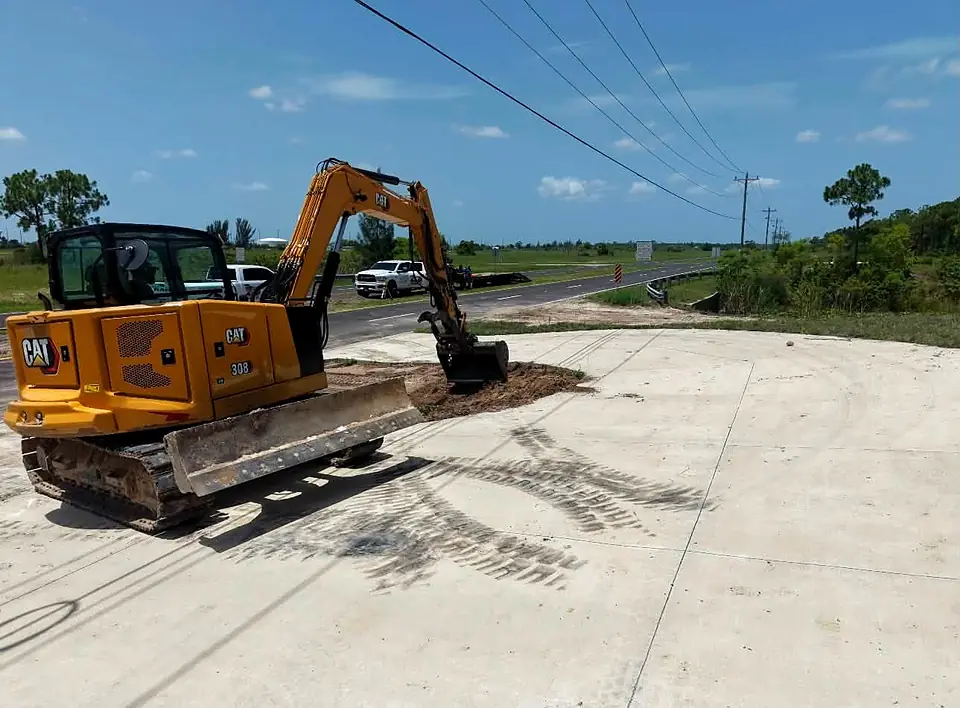
Filling the box on a Lehigh house
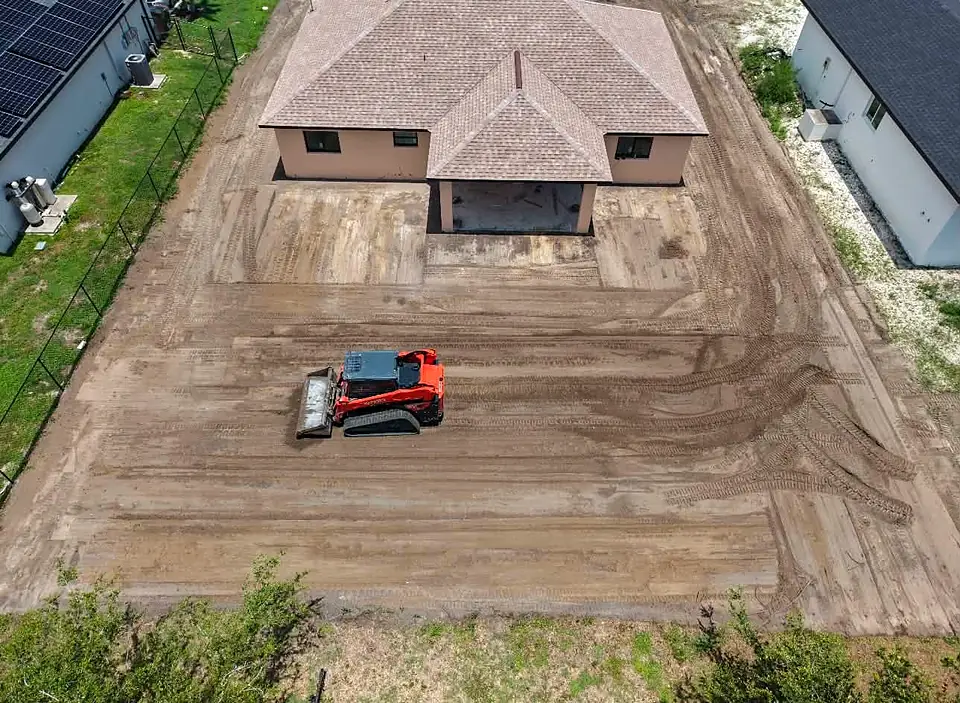
Before any fill goes in, we clean out the bottom. Form boards, block pieces, bags and loose sand from the footing work come out, because the density test checks the fill under the slab and a soft layer down by the footing is where tests fail. Then fill goes in over the wall with the machine, or through an open side when the lot gives us the room.
We bring the fill up a few inches at a time. Dry fill gets water, and the compactor goes over each layer before the next one drops. FEMA's guidance on fill that supports a building calls for compaction to at least 95 percent of standard laboratory maximum dry density; your engineer's plans or soil report set the actual spec for your house, and we work to it. More trips with thinner layers is how the bottom of the box ends up as tight as the top.
Plumbing and the builder's schedule
Stem wall fill fits a narrow window, after the walls are poured and before the slab. On many houses the plumber runs rough-in inside the box first, and we work fill in around those pipes by hand where the machine cannot reach, so nothing shifts or cracks. If the plumber comes after us, we leave the fill flat and firm for their trenches.
Builders working several Lehigh lots on one street move block crews and slab crews from house to house, and we schedule around them and the testing lab instead of a fixed date. After a heavy afternoon rain the box can hold water like a tub. We pump it or let it soak away before filling, since fill placed into standing water stays soft.
Backfilling the outside and starting the yard
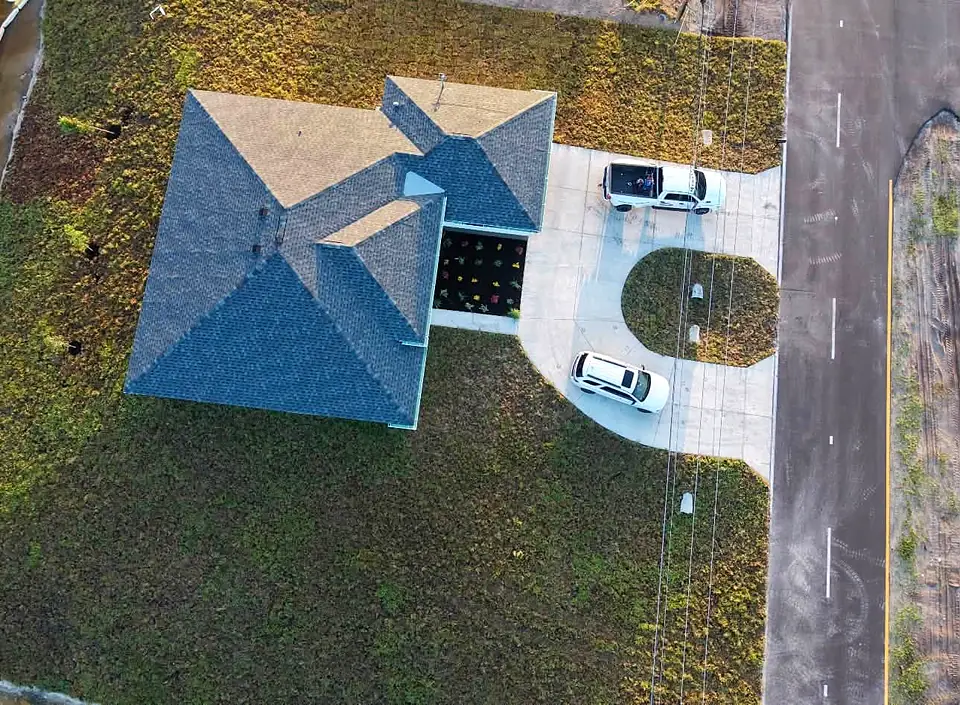
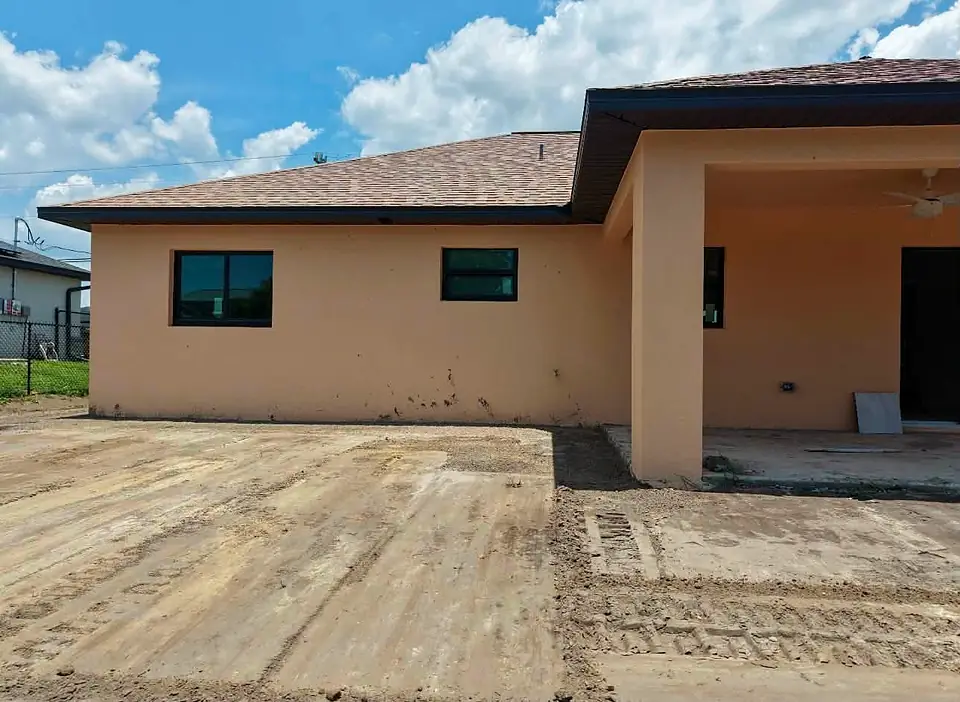
Outside the walls, the footing trench and the gap left by the forms need filling. We wait for the builder's go-ahead, then place backfill against the block in layers so it does not push on the wall or leave voids that wash out. That backfill becomes the start of the yard. The building code wants grade falling away from the foundation, at least 6 inches in the first 10 feet, so we shape it toward the swale with the final grading in Lehigh Acres already in mind.
Getting fill to the house on a vacant street
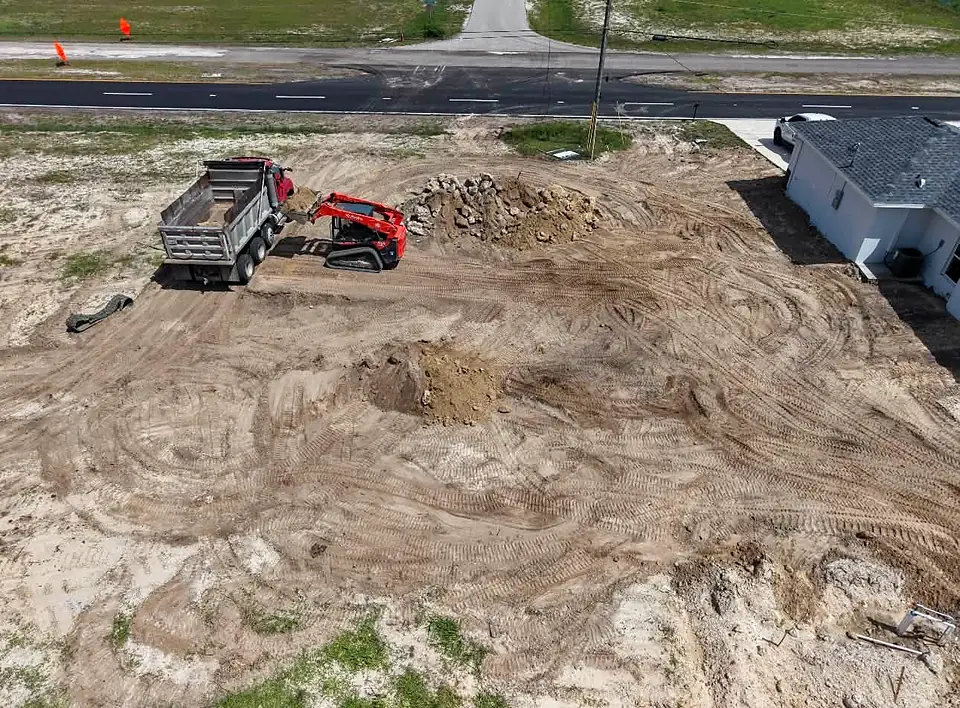
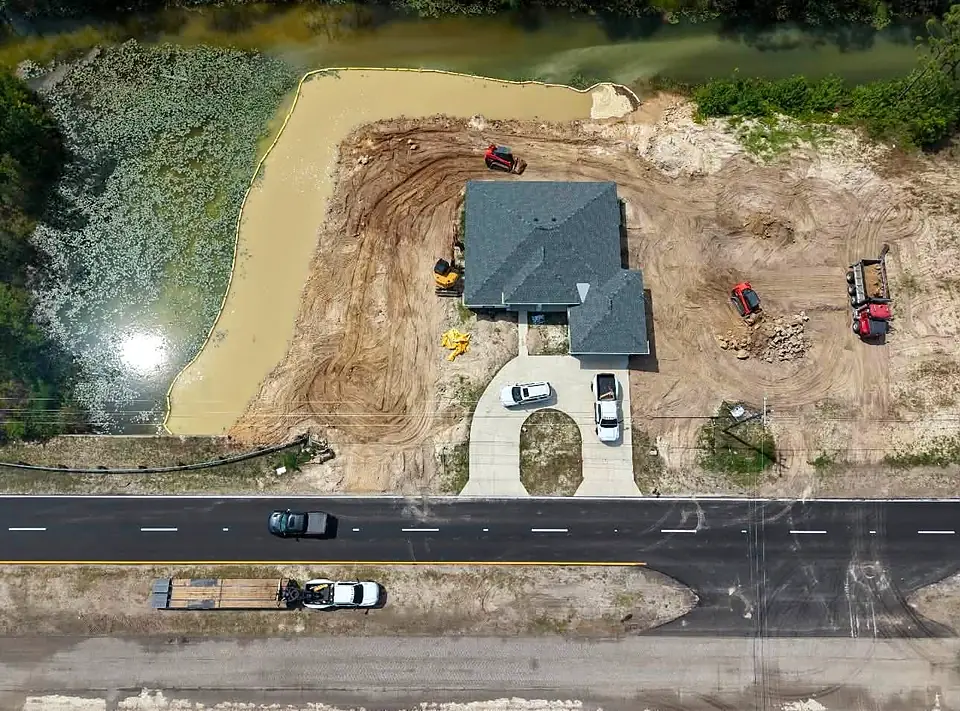
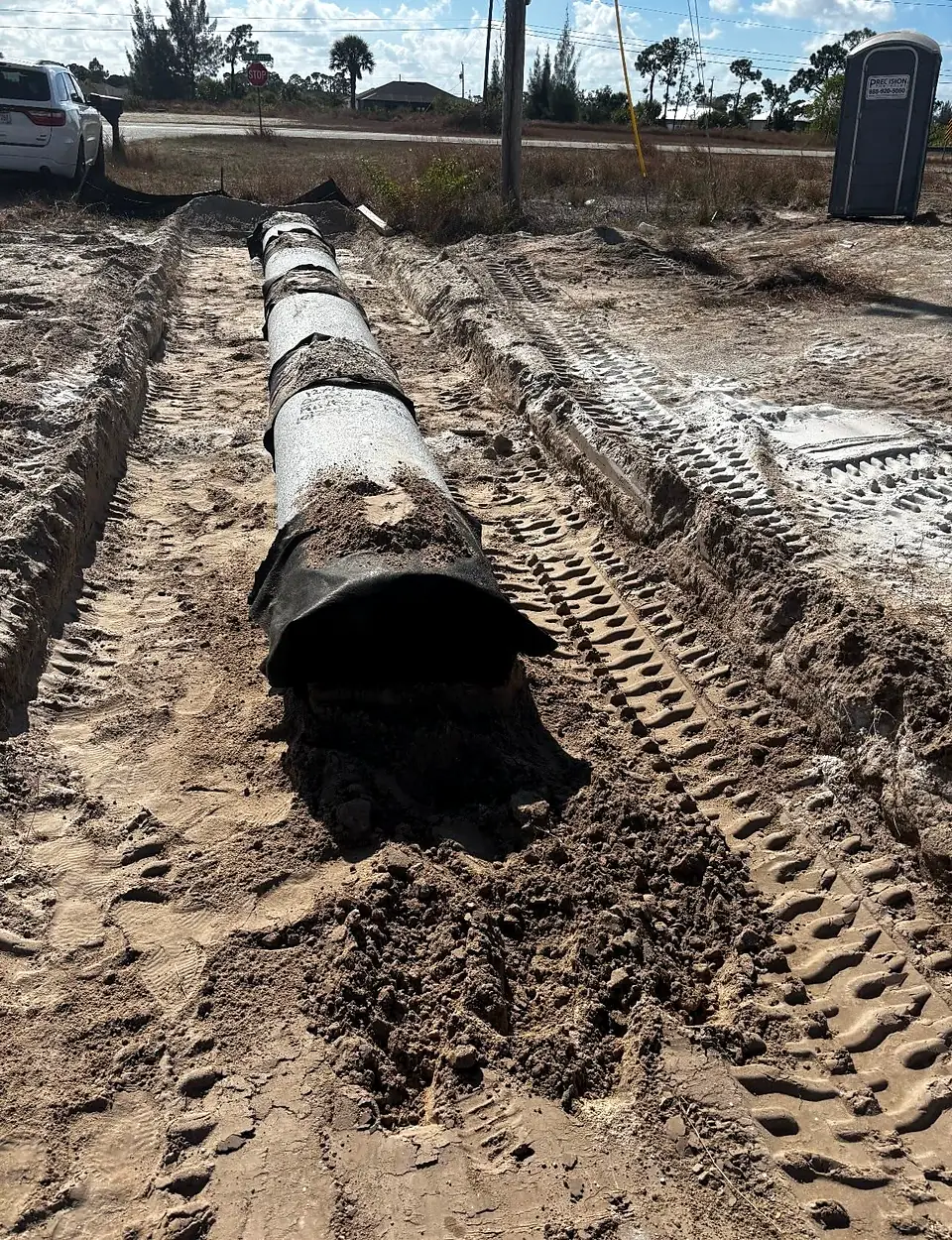
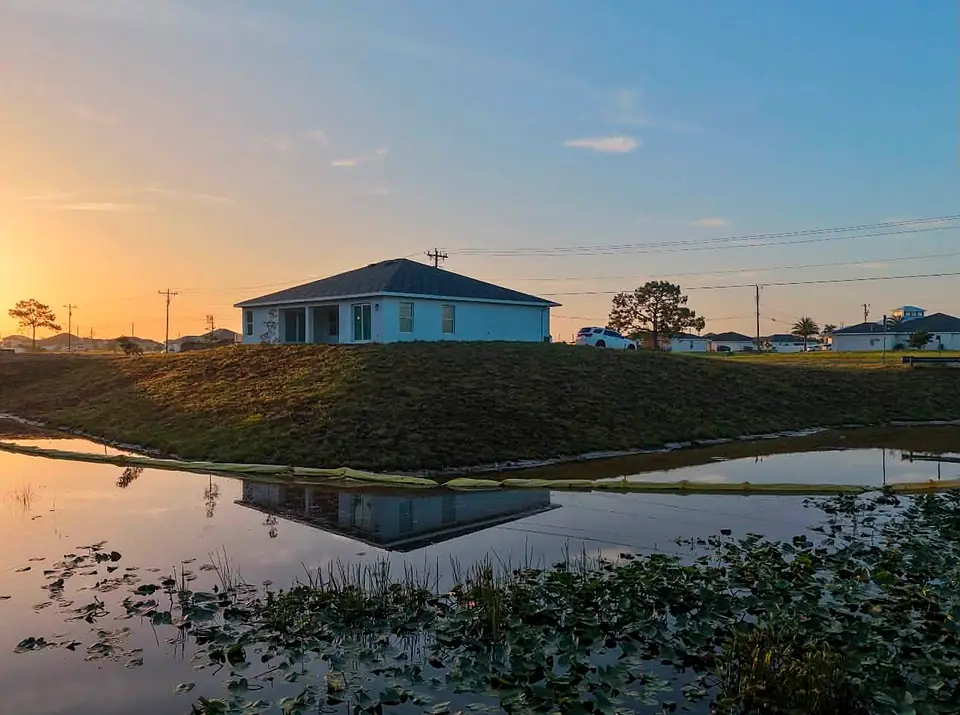
Lehigh lots often have no driveway yet when the stem wall goes up, and trucks have to cross the road swale to reach the house. We set one crossing, ideally a rock construction entrance, and keep stockpiles off the swale and away from any district canal behind the lot. Fill for the walls can ride on the same trucks as any other lot fill, so one order covers it. The rest of our Lehigh work is on the Lehigh Acres page.