Who permits what in Lehigh Acres
Lee County Development Services issues the building permit. Its residential guide says a site fill grading plan has to go in with the application when final grade will sit more than 18 inches above the crown of the road or a developed lot next door. On flat Lehigh ground that comes up more often than buyers expect, so we check the survey and the plan elevation before a single load is ordered.
Lee County only requires its own vegetation removal permit on single-family lots of 5 acres or more in the unincorporated county, so a quarter or half acre Lehigh lot normally does not need one. Wildlife rules still apply. Gopher tortoises are common out here, and FWC wants every burrow avoided by 25 feet or covered by a permit. Burrowing owl burrows get a 33-foot buffer from February 15 to July 10 and 10 feet the rest of the year.
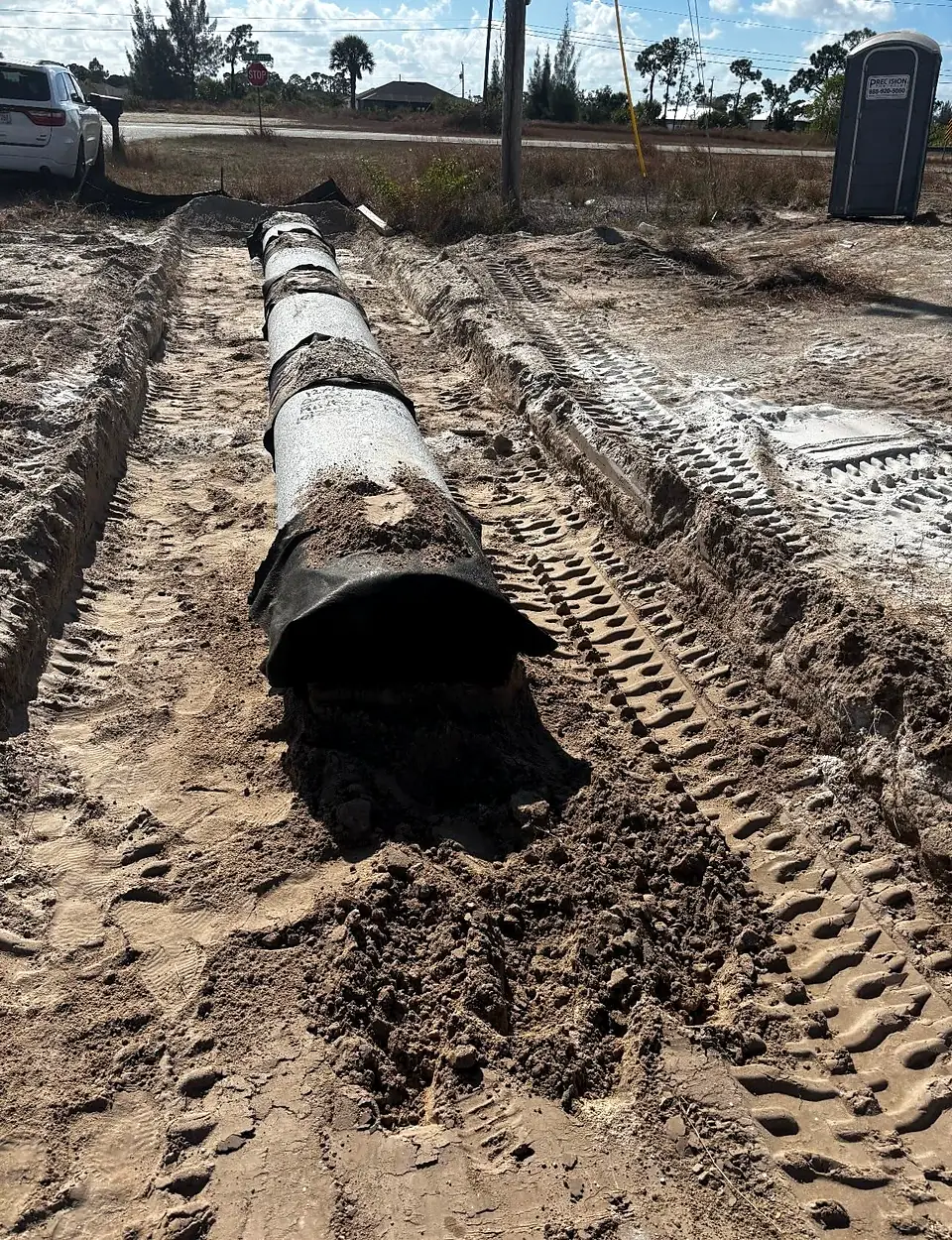
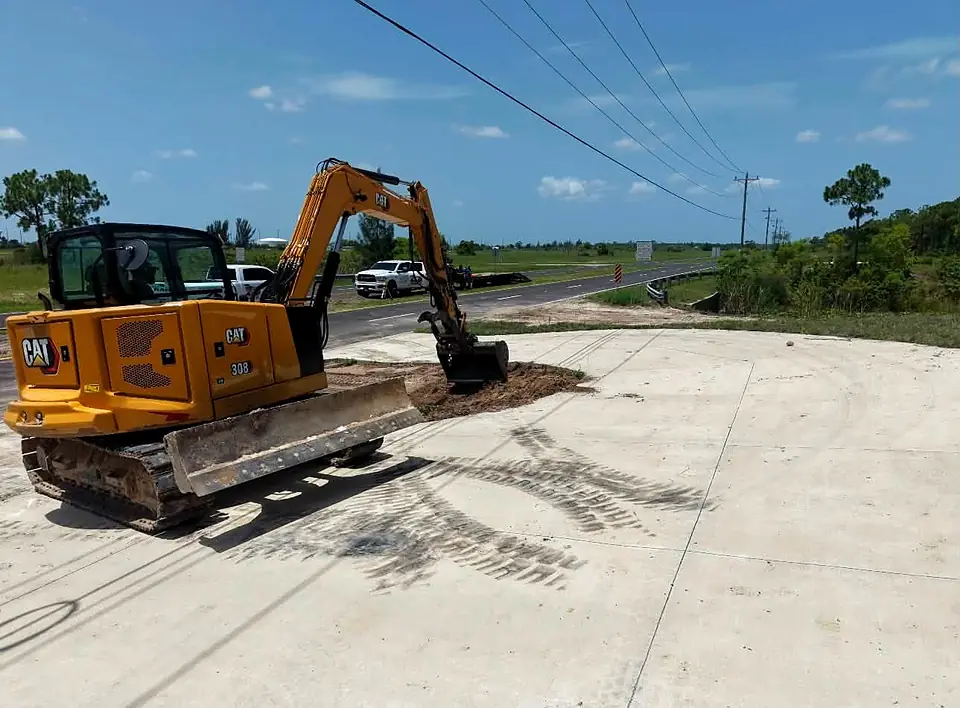
The driveway connection is a separate Lee DOT residential permit applied for online, with a posted fee of $95 for a single driveway and $120 for a double. County rules set a 15-inch minimum culvert with ends mitered at 3:1, and the apron from the edge of the road to the right-of-way line has to be concrete or asphalt. Our Lehigh culvert guide walks through the stake-out and the inspections that follow.
The ground, the canals and the water out east
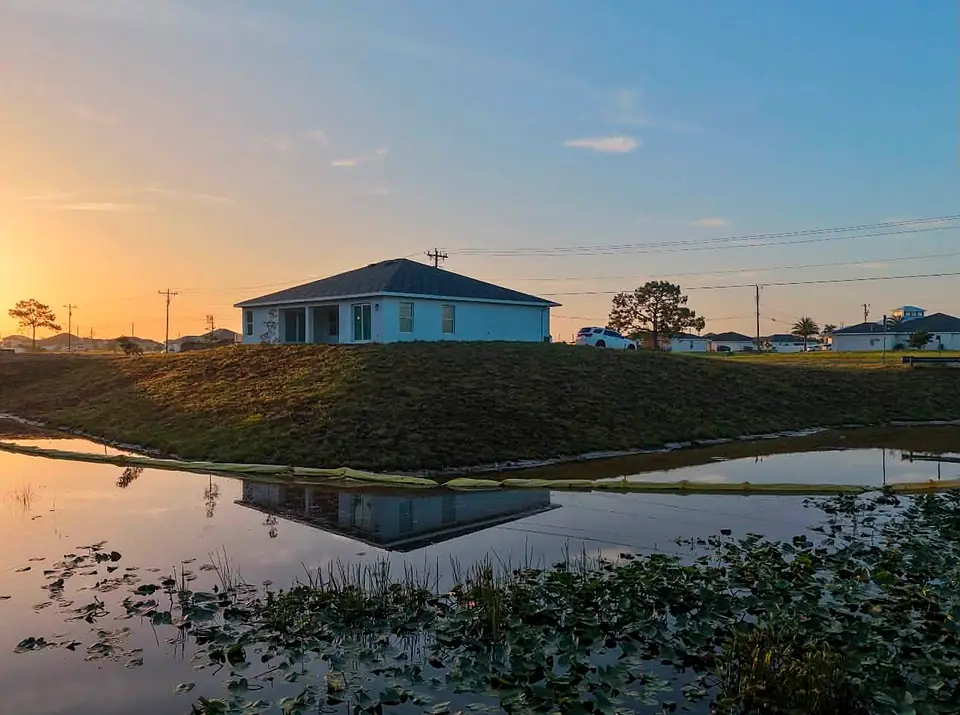
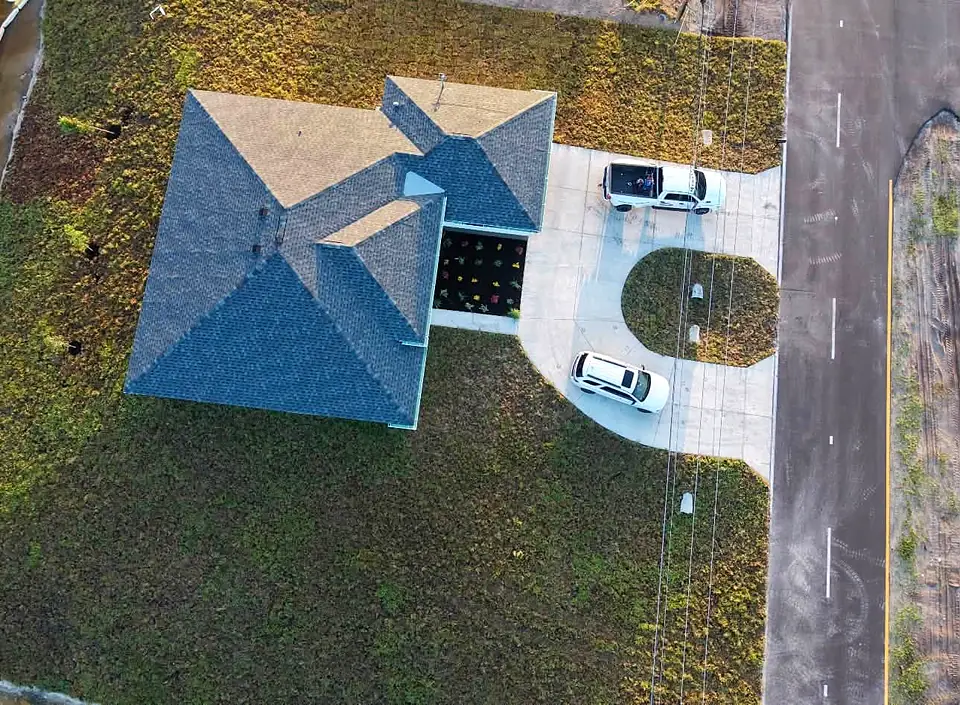
Lehigh sits around 23 feet above sea level, higher than the coast, but it is flat and water moves slowly. About 311 miles of canals carry it away. Those canals were dug for drainage and flood control, not for boats, and the Lehigh Acres Municipal Services Improvement District runs them. So there are no seawalls in Lehigh, but there are plenty of swales, road ditches and outfalls your lot has to drain toward.
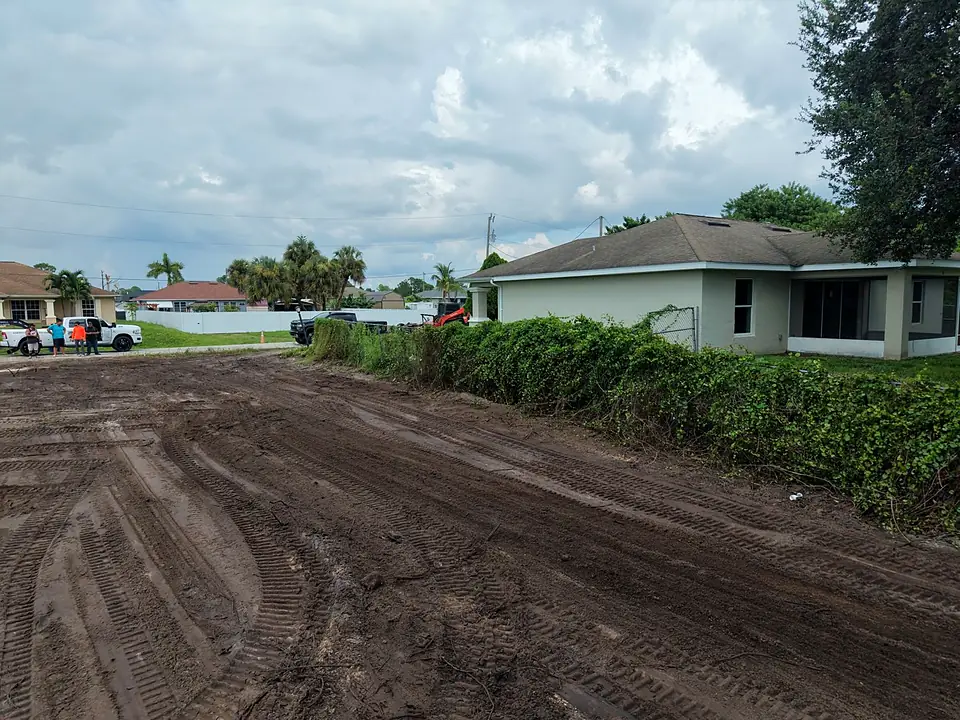
That drainage setup is why the swale grade matters so much. Push a pad too close to the road or set the pipe high, and water backs up on your lot or the neighbor's. We set the culvert to the flow line the inspector stakes, keep fill out of the ditch, and shape the side swales so the yard sheds water toward the street the way the plan shows.
Water supply is another local wrinkle. In the Eastern Lehigh Acres Area of Concern, Lee County stopped issuing irrigation well permits for the Sandstone Aquifer, and new wells in that aquifer may only serve the house. If your lot is out there, plan the yard around it and keep the well, septic and pad positions straight on the site plan before we start moving dirt.
What we do on a Lehigh lot, start to finish
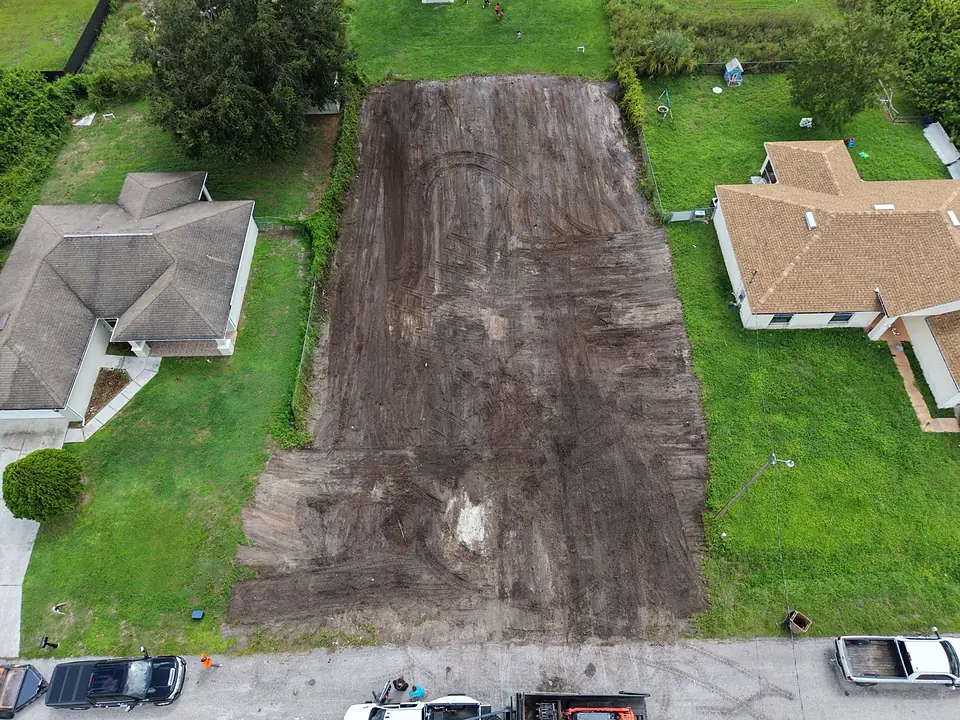
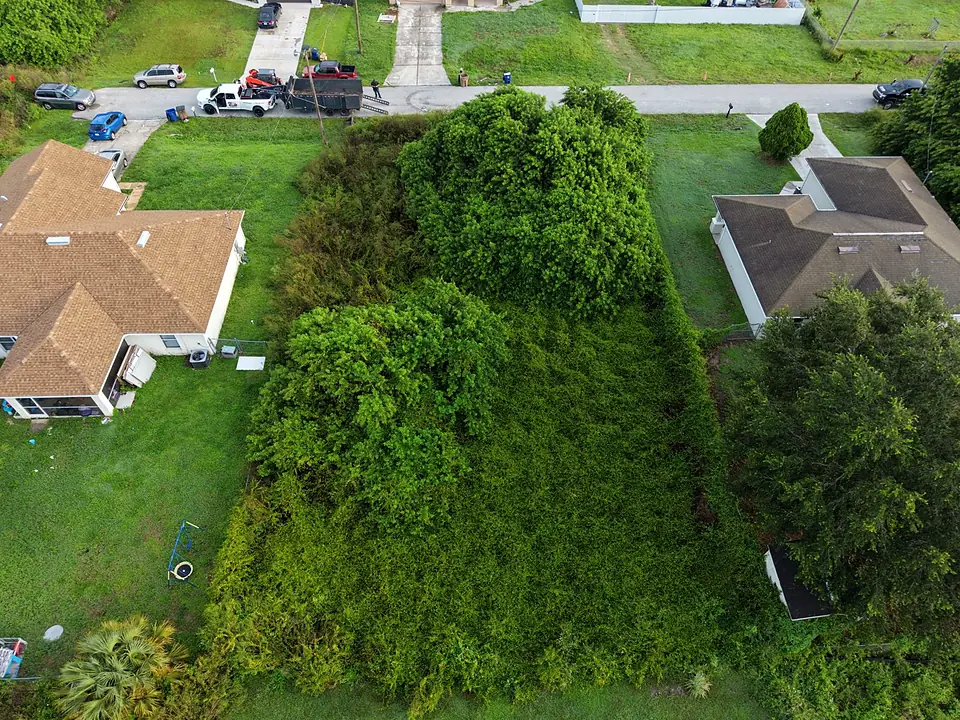
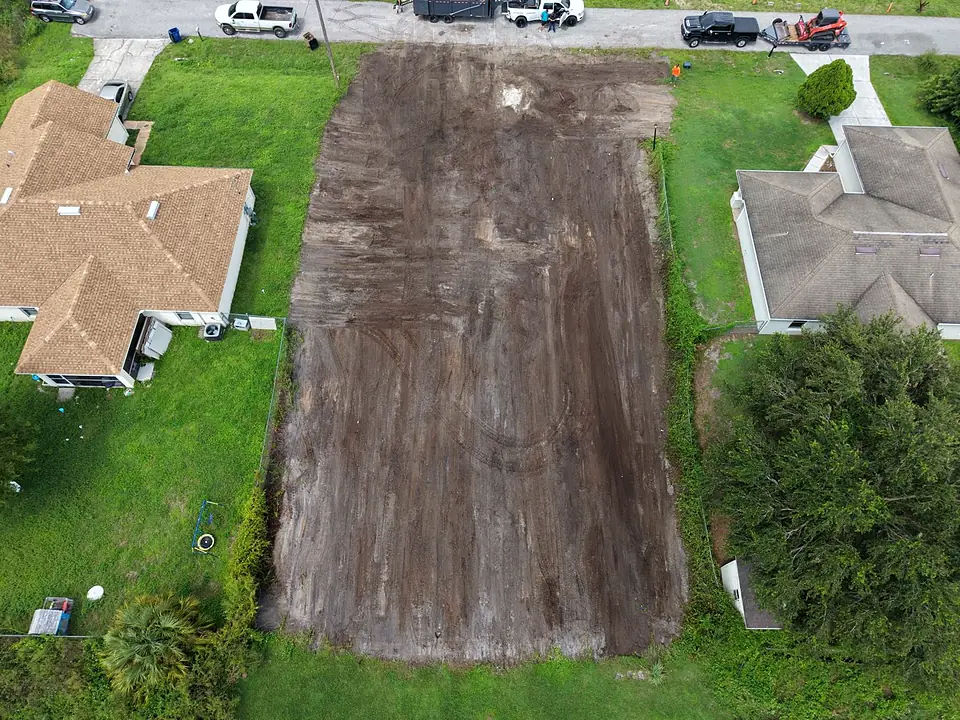
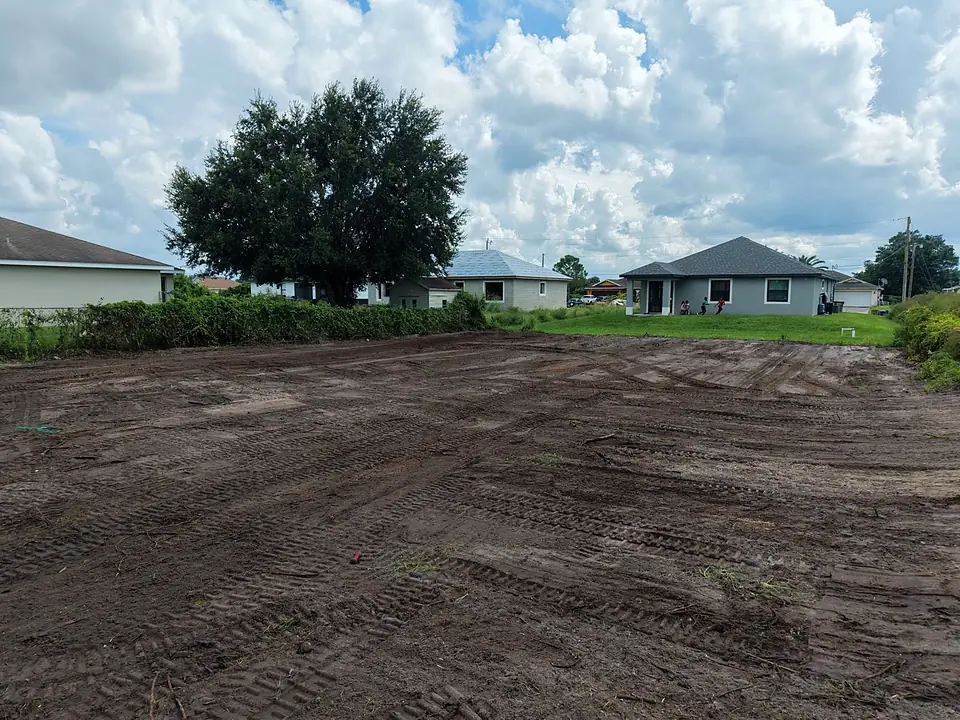
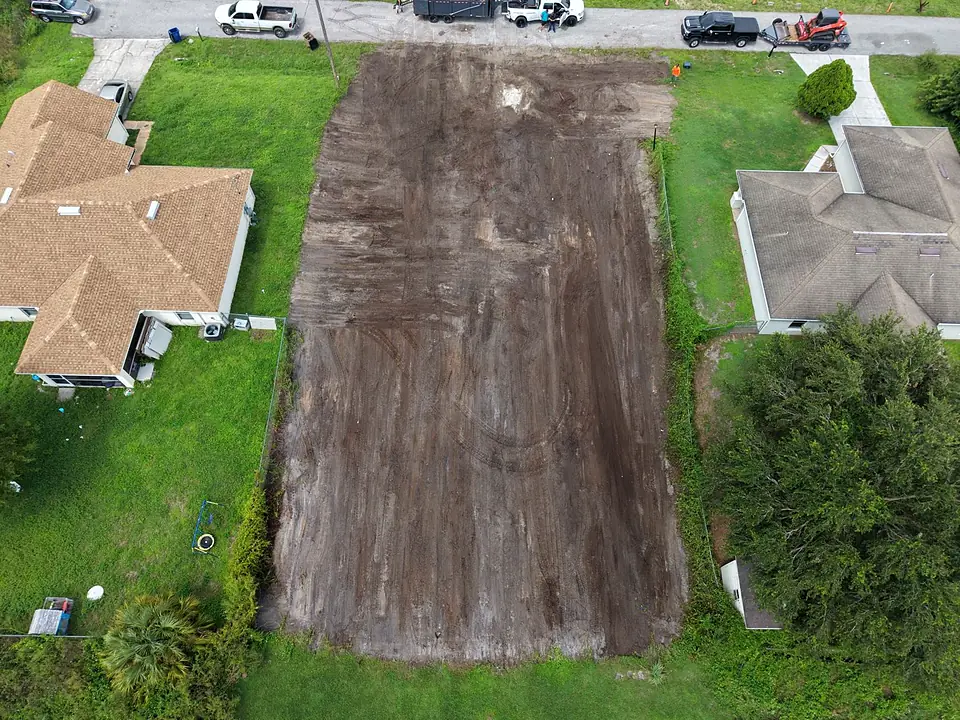
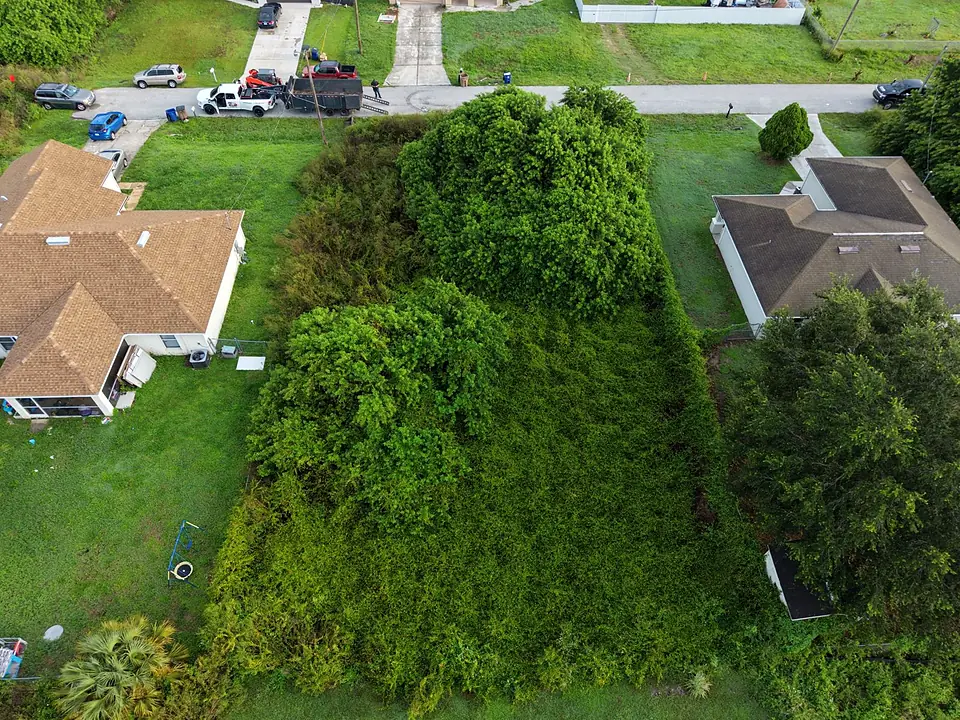
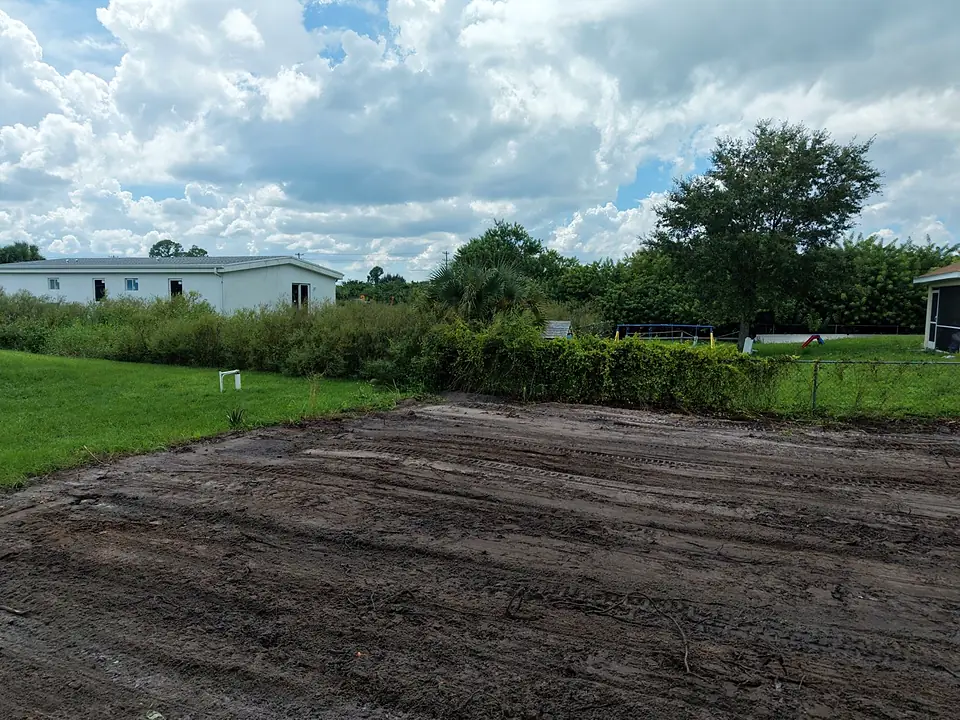
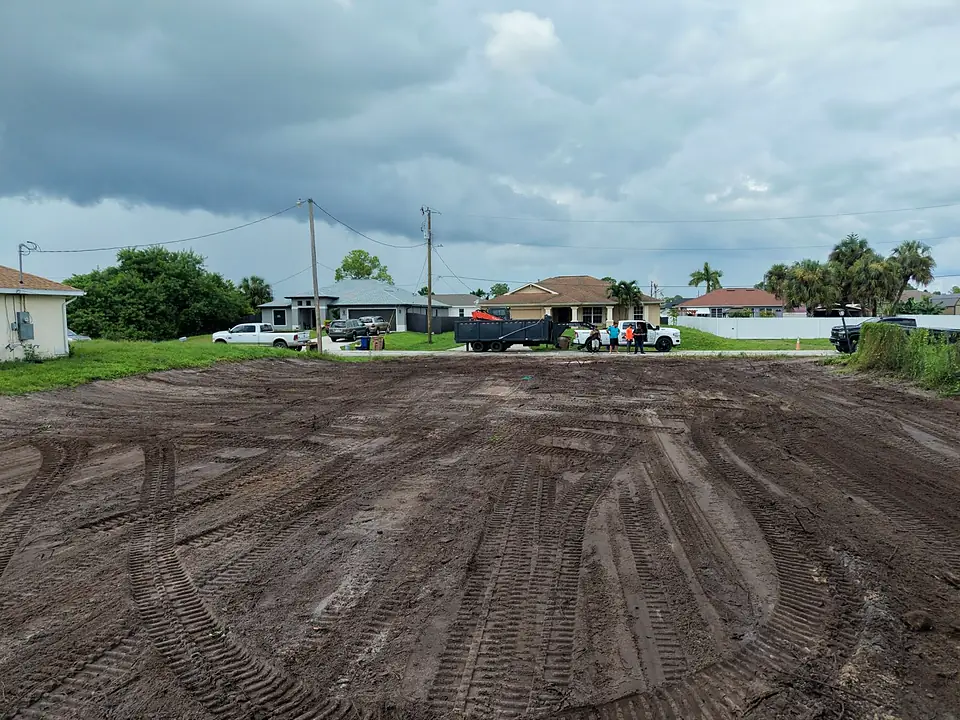
First we walk it. We look for tortoise and owl burrows, find the corners, note the trees worth saving and check where the swale and road crown sit. Then we call Sunshine 811 at least two full business days before any digging. Clearing comes next, usually with a forestry mulcher on brushy lots, and debris is hauled or mulched in place, since Lee County requires lot clearing debris to be properly disposed of or recycled.
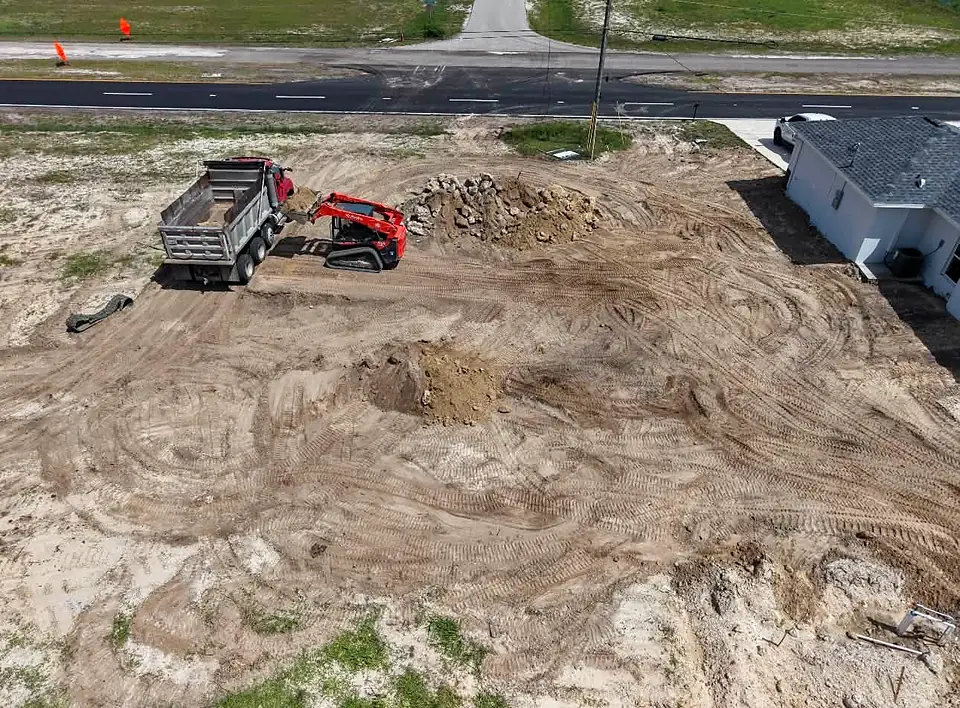
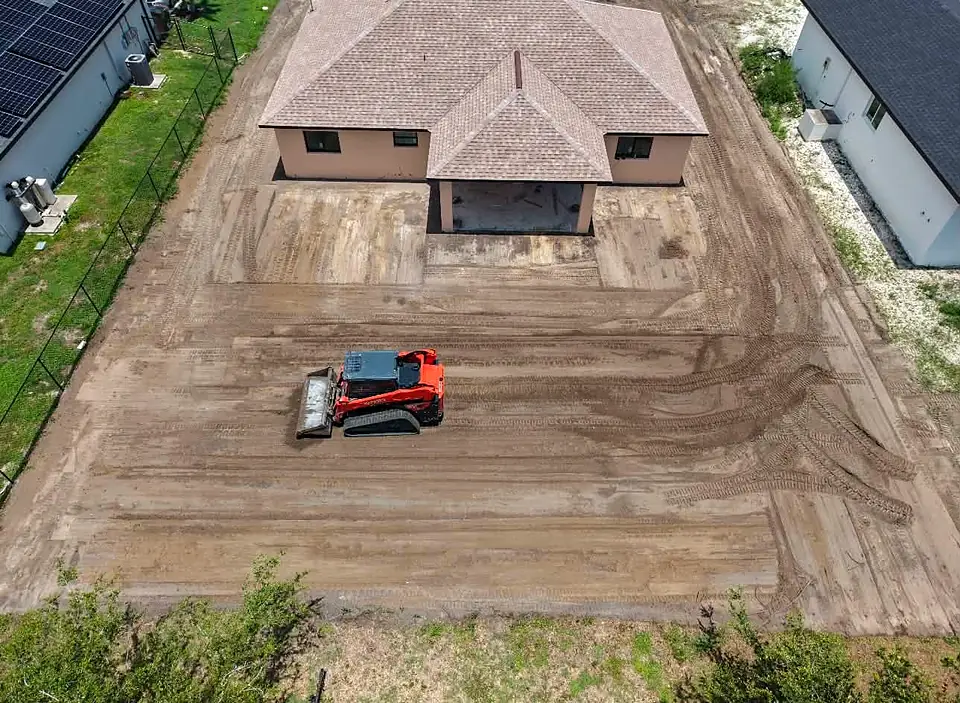
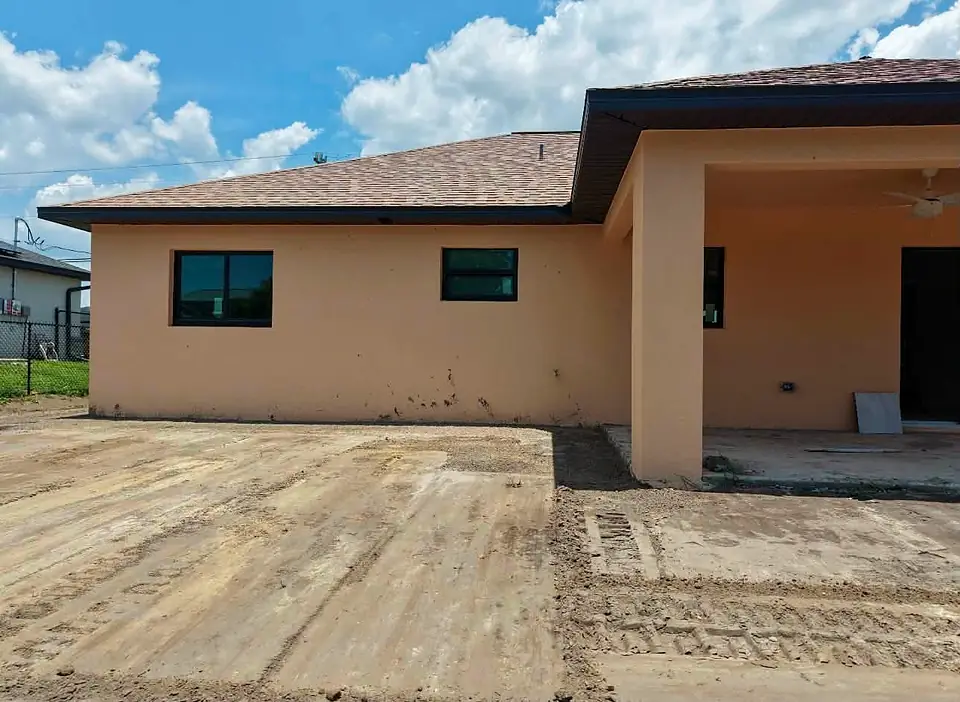
Then the pad. For a stem wall house we bring fill after the walls are poured and backfill inside in lifts, compacted so the density test under the slab passes. For a monolithic slab pad we build the whole pad to plan elevation first and compact it before the forms go on. Once the house is up, we cut the drive, set the culvert, bring base rock and grade the yard so it drains, ready for sod and the final inspection. The Lehigh Acres lot guide walks through each step and the county rule behind it.