What Cape Coral inspectors check on grade
The city's building inspections quick reference spells out the site items for a residential certificate of occupancy. Final grade has to drain water away from the foundation with at least 6 inches of fall in the first 10 feet (FBC-R 401.3). No slope on the site can be steeper than 4 to 1, and there must be a swale at the side property lines. Water discharge has to land at least 12 inches from the foundation and cannot be aimed at the neighbor's property.
At the landscape final, the inspector checks that lot grading and structure elevation match the approved plot plan. The city also wants adjacent properties cleaned of construction material and debris before the CO. Under the land development code, gutter downspouts discharge toward the front or rear property line, and nothing is allowed to block flow in the swale. We grade with that list in hand.
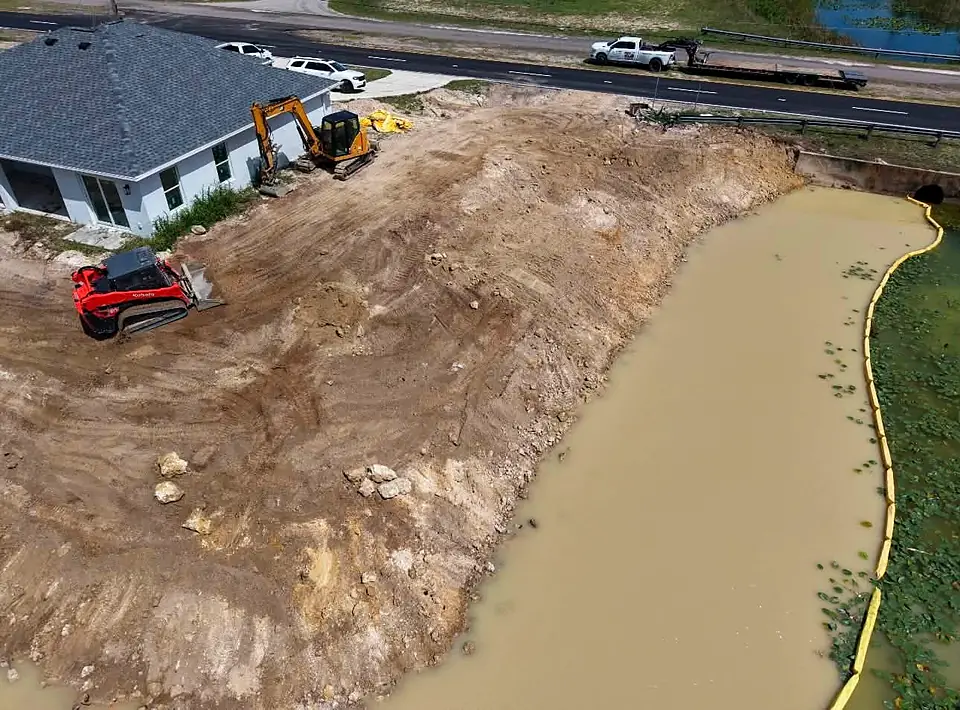
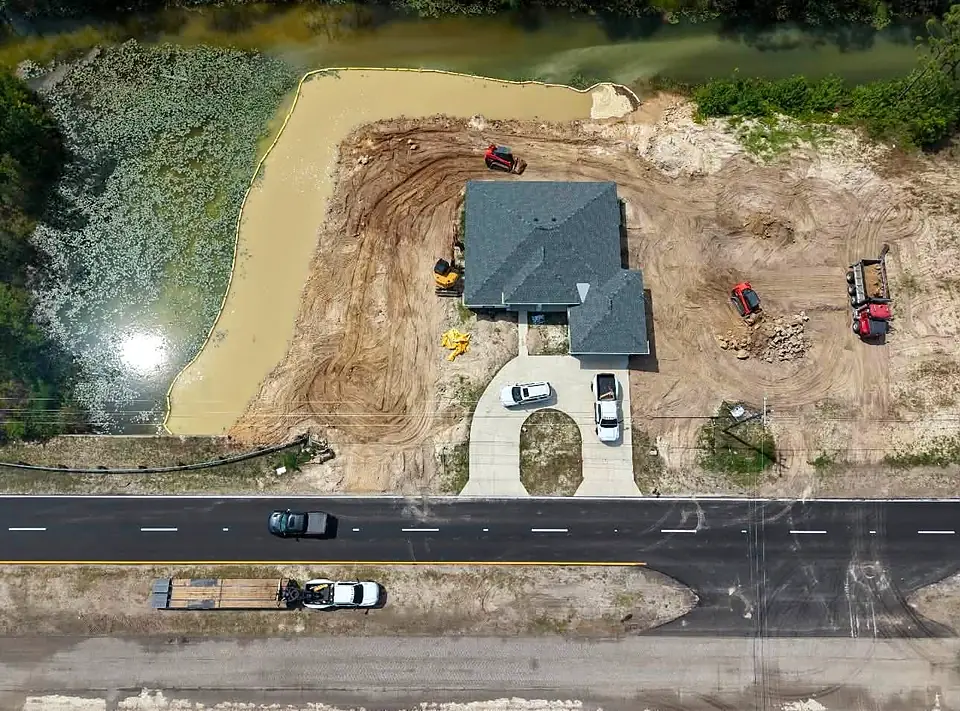
From pad to final grade on a new build
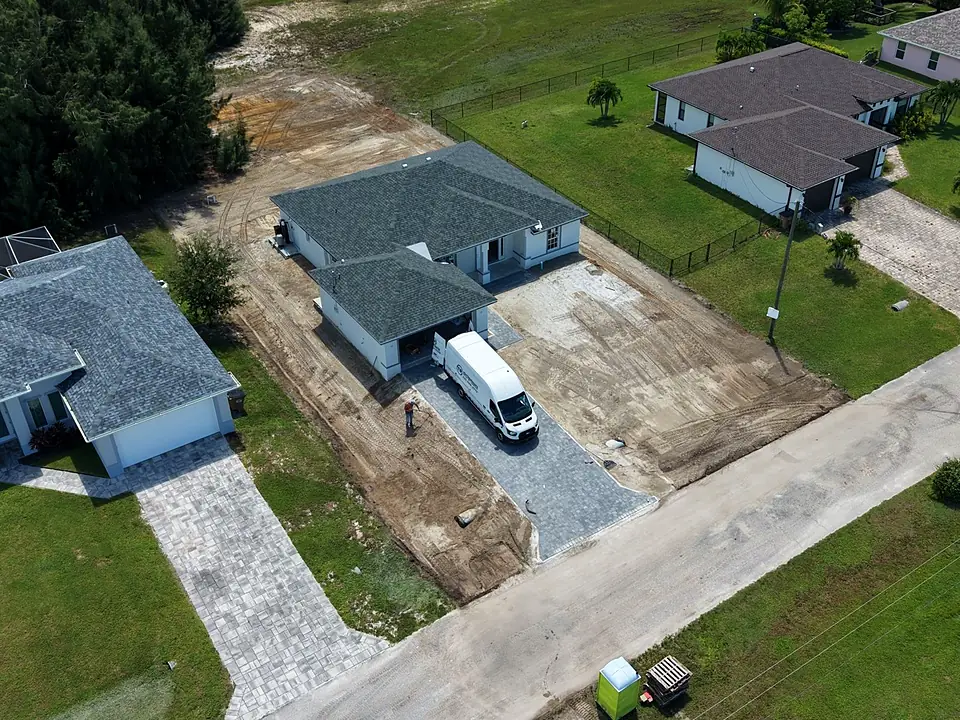
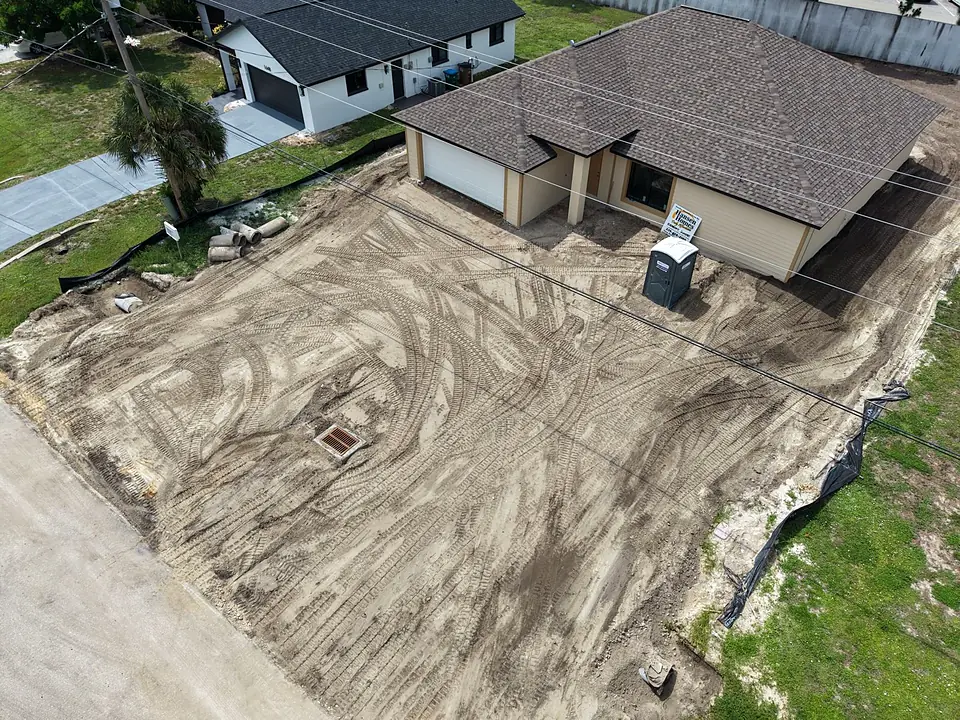
The plot plan sets the numbers. In Cape Coral the top of the garage floor must be at least 1 foot above the crown of the road, and the building permit holder gets the correct swale flow line elevation from the city. We set grade stakes off those elevations and build the pad to them, so the slab or stem wall lands where the plans put it.
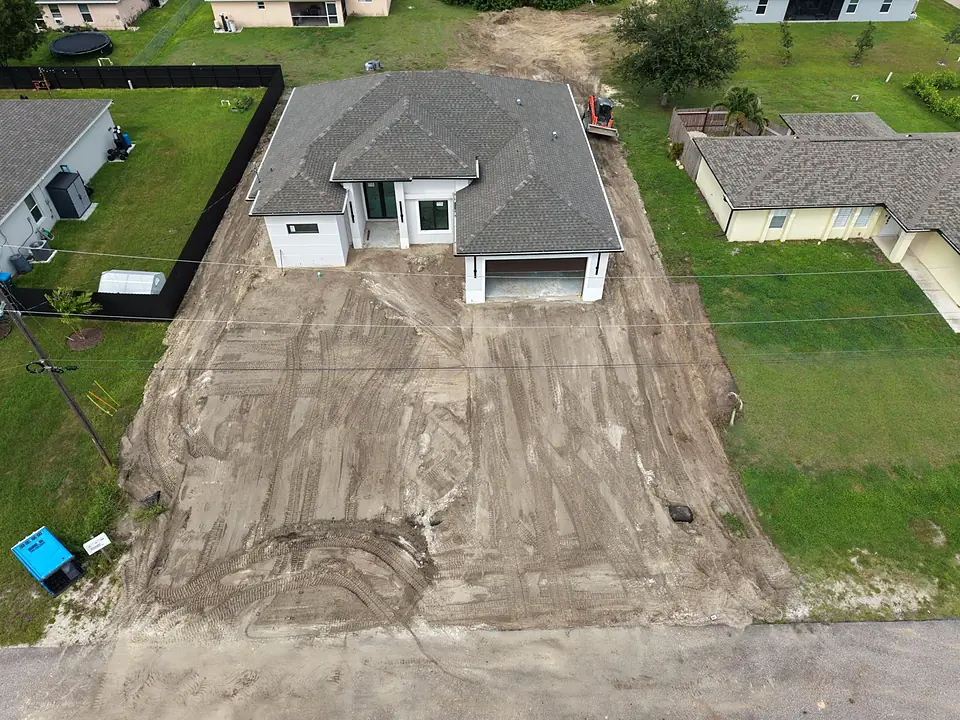
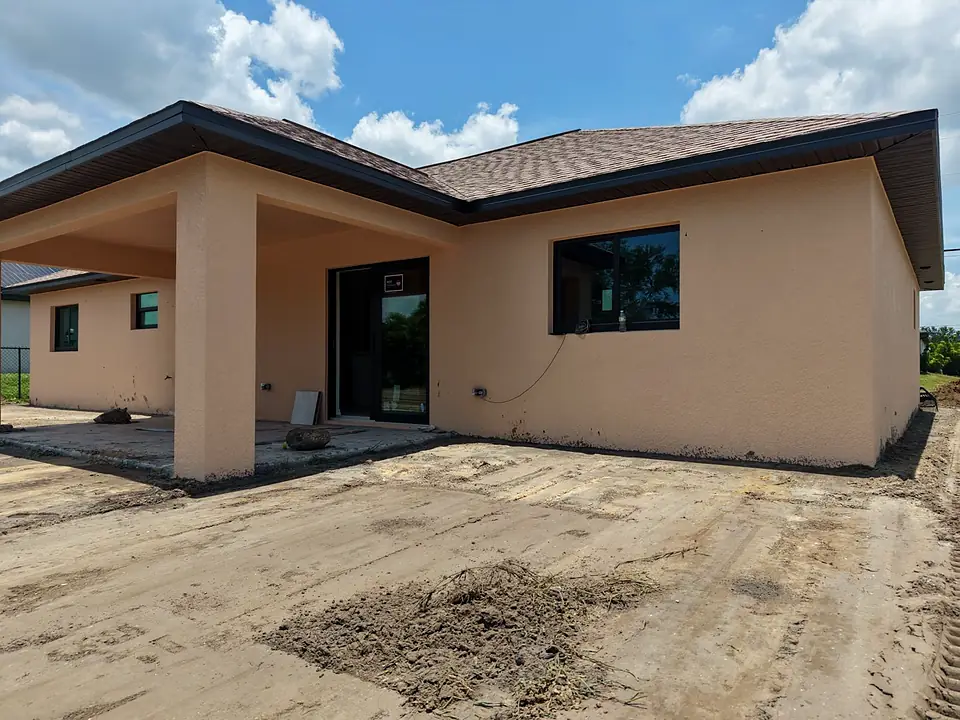
Fill under the foundation gets a density test, and the city's inspection reference calls for at least 95 percent compaction. We place fill in lifts and compact each one so the test passes the first time. On stem wall homes we come back after the pour to fill the inside of the walls; our stem wall fill page covers that step. The lot then sits at rough grade while the house is framed and dried in, and we return for the finish.
Final grade for the certificate of occupancy
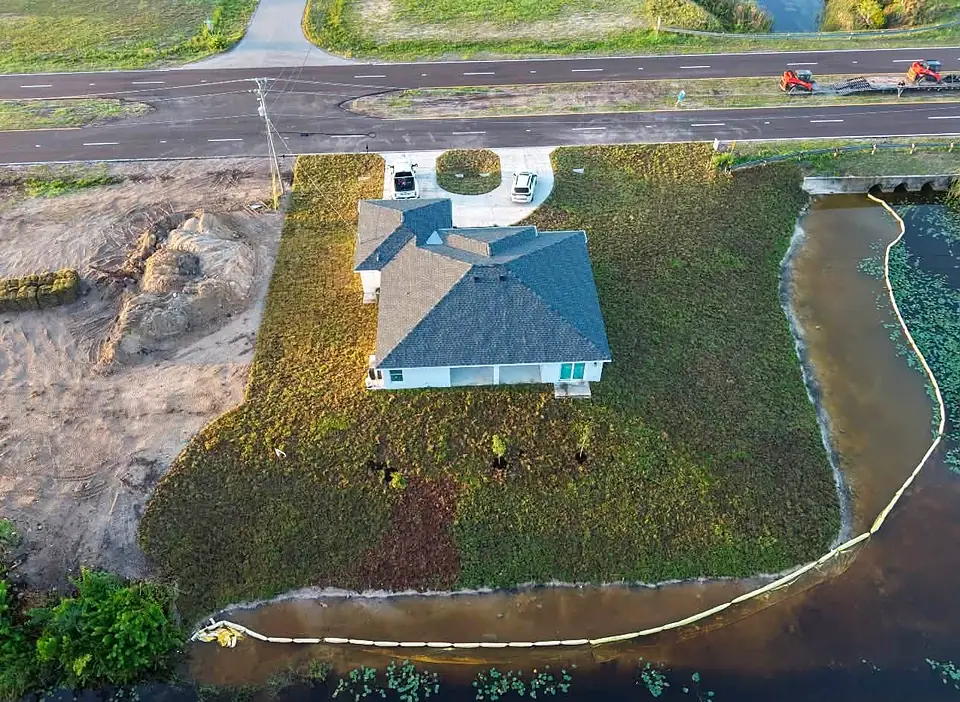
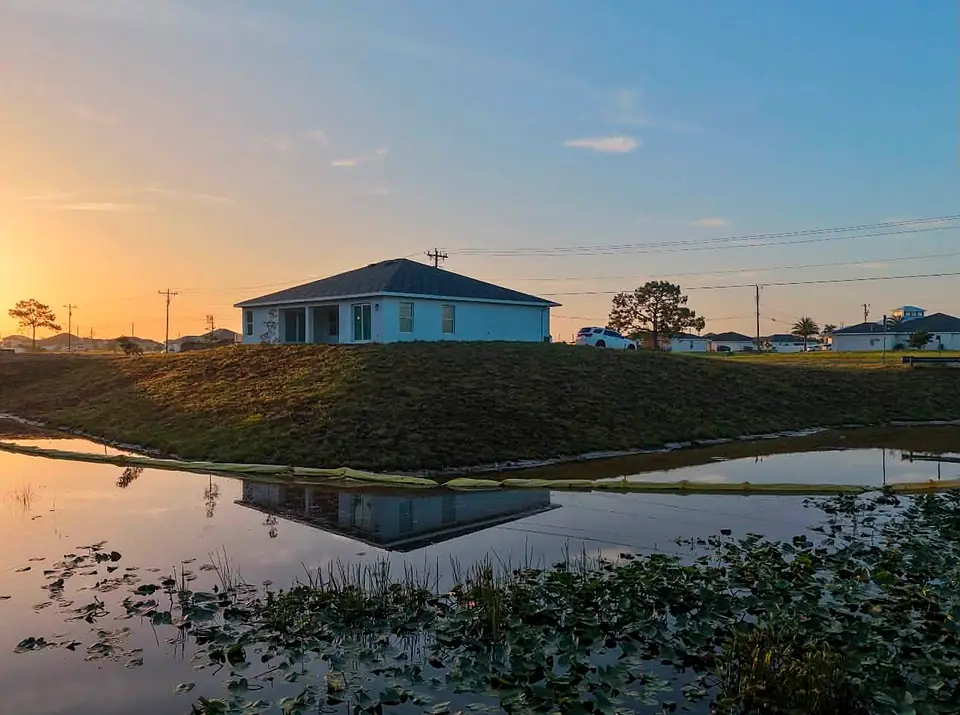
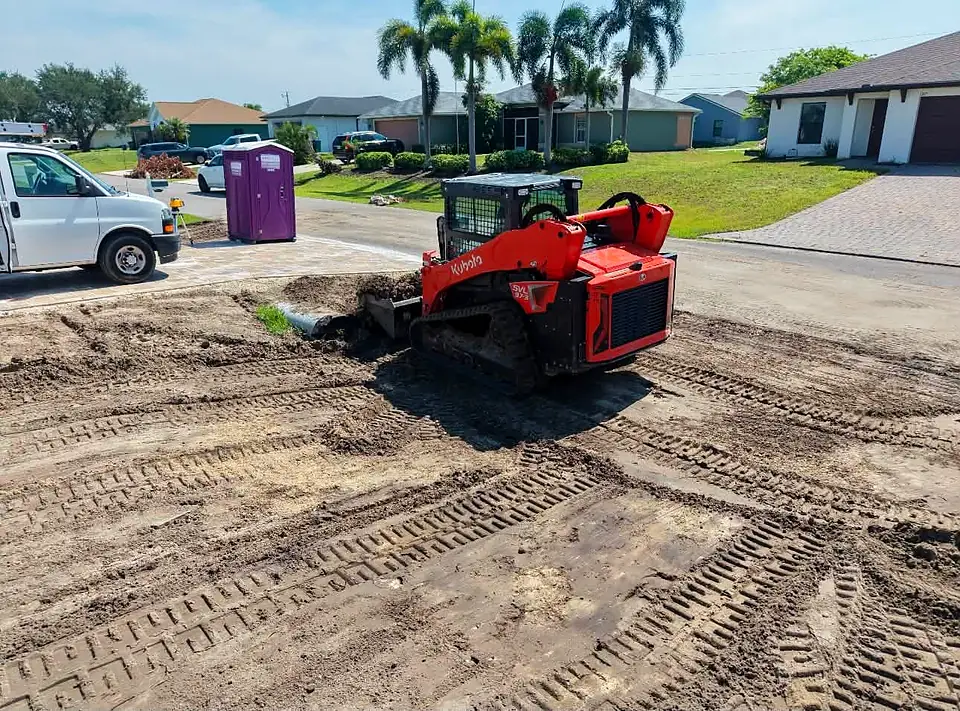
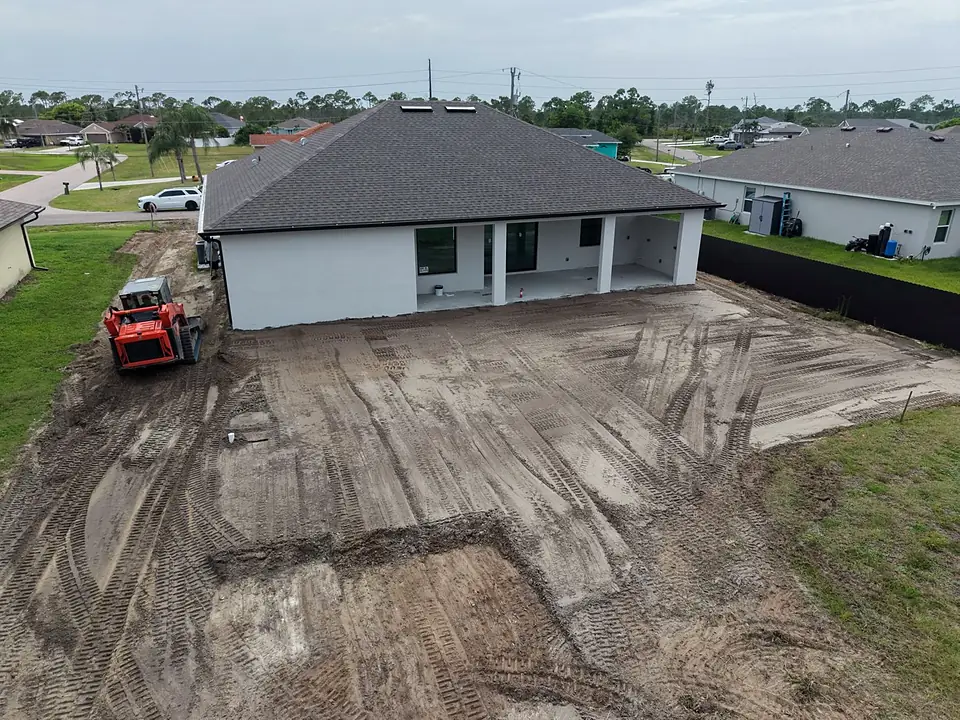
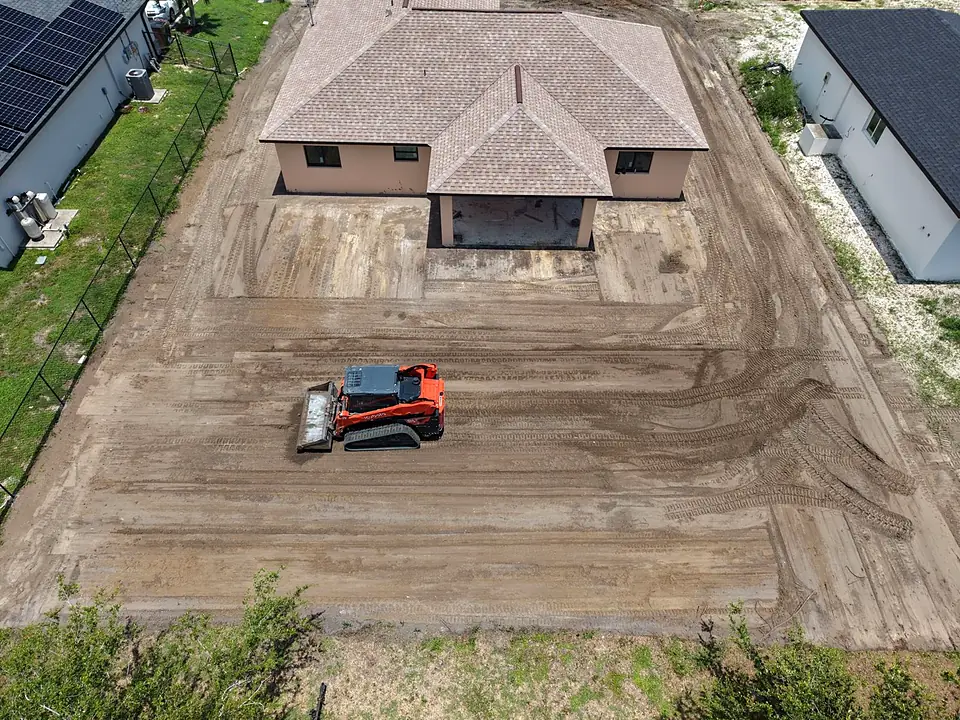
Final grade is the last pass with the machine before sod. We pull the yard down from the foundation so it falls at least 6 inches in the first 10 feet, cut the side swales so they carry water to the front or the rear, and tie the front yard into the city swale at the elevation the city set. Low spots get filled, high spots get cut, and rock and construction scraps get picked out.
If the right-of-way or swale area is being sodded, Cape Coral requires a re-sod permit, and the Stormwater Division stakes the correct sod elevation before the sod goes down. We grade to those stakes so the sod finishes flush with the drive and the swale still works. When we leave, the lot is smooth and ready for the sod crew, or for our own sod installation.
Grading rules outside the city
Unincorporated Lee County adds its own trigger. If final grade on the lot will be more than 18 inches above the crown of the road or any adjacent developed lot, a site fill grading plan has to go in with the permit application. Lee County also asks for the livable floor in X zones to sit 1 foot above the crown of the road, and state law and county rules bar filling or blocking natural flowways.
In Charlotte County, the right-of-way swale must be at least 6 inches below the edge of pavement, with side slopes no steeper than 4:1. Collier County asks owners to keep the swale centerline at least 1.1 feet below the road centerline. We read the rules for the county the lot sits in before the first load of dirt arrives. Town details are on our Lehigh Acres grading page.
For homeowners: a yard that holds water
Not every grading job is new construction. Older yards settle, planting beds get built up against the house, and a new pad next door can change how water crosses the lot line. If water sits against your foundation or lingers in the yard for days after a summer storm, the grade has probably changed.
We look at where the water comes from and where it needs to go, then regrade to send it toward the swale. We keep it off your neighbor, because city code says discharge cannot be directed at the next lot. The rainy season runs May 15 to October 15, so fixing it before then pays off. Our hurricane season drainage guide has a checklist you can walk yourself.