Inside city limits: the City of Naples demolition permit
The city's demolition application asks for a site or floor plan showing the demolition area, a construction site management form, a notification and offer form, the list of notified owners with proof of mailing, the current property record or recorded deed, a notarized owner affidavit and a boundary survey showing the lot area in square feet. Applications go in electronically through the city's portal.
Under Section 16-291 of the city code, the notice goes to every owner within 100 feet of the property at least 14 days before work starts, with the contractor's phone number, the after-hours construction site inspector's number and the timetable. The form also has the contractor offer neighbors a pre-demolition inspection by an engineer or qualified inspector, and seismic monitoring during the work. The city releases the permit 14 days after that notice, and its checklist says demolition permits expire within 30 days, so the machine needs to be ready when the permit is.
The city lists its own fees: a permit fee of 30 cents per square foot of gross structure area with a $100 minimum, a plan review fee of 20 percent of the permit fee, and $35 for each required building and fire inspection. Those are the City of Naples fees; our demolition and hauling are quoted separately.
What the city checks on the site
The construction site management form asks the contractor to show silt fence, the construction fence, stabilized parking and access, the dumpster, material staging, the delivery access point and a weather emergency plan. Utilities have their own steps: the sewer lateral is capped and raised about 12 inches, or photographed if capped underground, and the water meter either stays on site protected or is pulled and reset by the city for a posted $75 fee.
Trees and wildlife are part of it too. The city warns that removing protected trees can bring penalties from its Natural Resources Division and from FWC, and a Tree Alteration Permit is needed before anyone trims or removes a city tree. Bald eagle nesting season runs October 1 through May 15. In the Naples Historic District, contributing buildings face a 180-day wait before a demolition permit can issue, and work west of the Coastal Construction Control Line needs a Florida DEP permit as well.
Naples addresses in unincorporated Collier County
Outside city limits, Collier County's demolition permit asks for a proposed site plan showing which structures are being removed or altered. Partial demolitions may need signed and sealed plans from an architect or engineer for the structural changes. Seawall and dock demolition goes in under Collier's marine application instead. The permit is filed as a complete demolition, a complete accessory demolition or a partial demolition.
For asbestos, Florida DEP's residential exemption covers a single house, or a residential building with four or fewer units, torn down on its own. The city's checklist still says an asbestos survey has to be filed with DEP for any demolition of a building that contains asbestos. If the home is on septic, the old tank has to be handled under the state septic program, which DEP has run from July 1, 2021. Our septic excavation work covers the digging to the permitted plan.
The vacant lot after the teardown
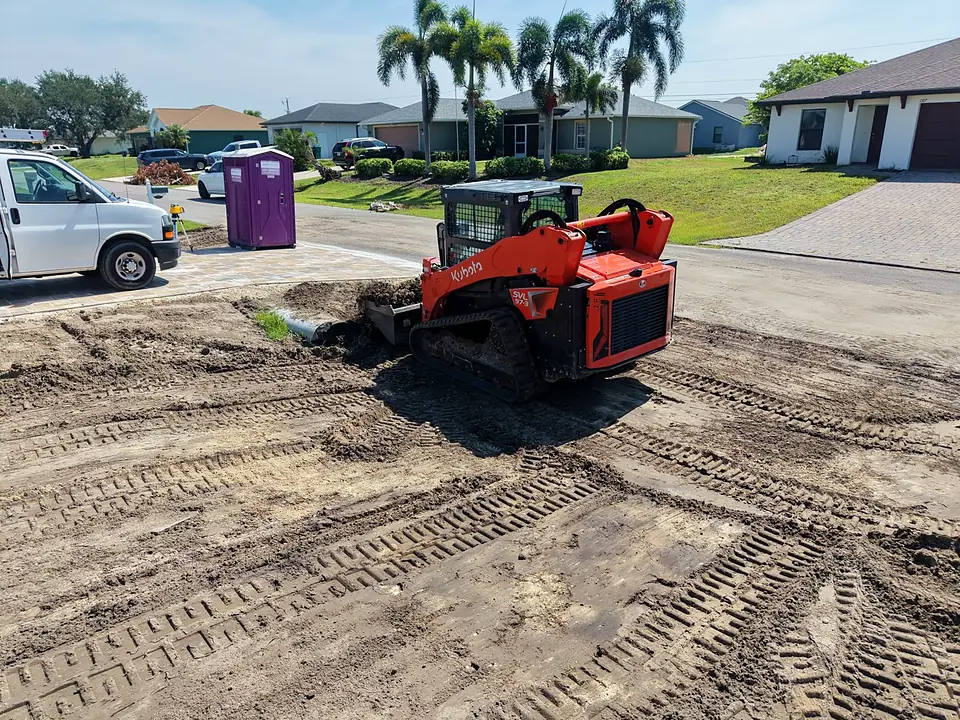
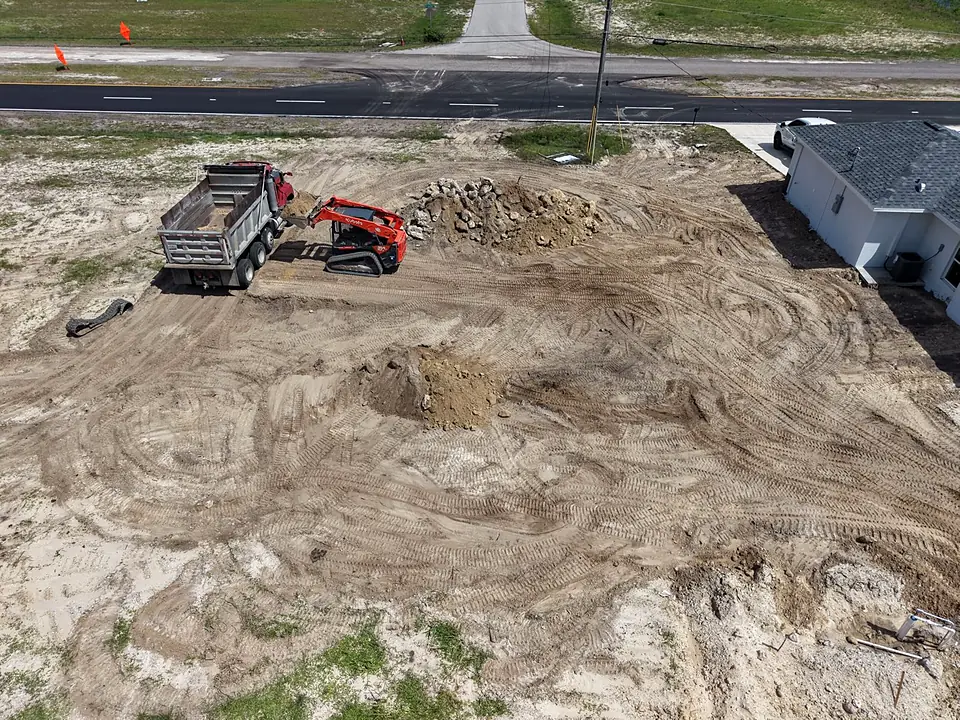
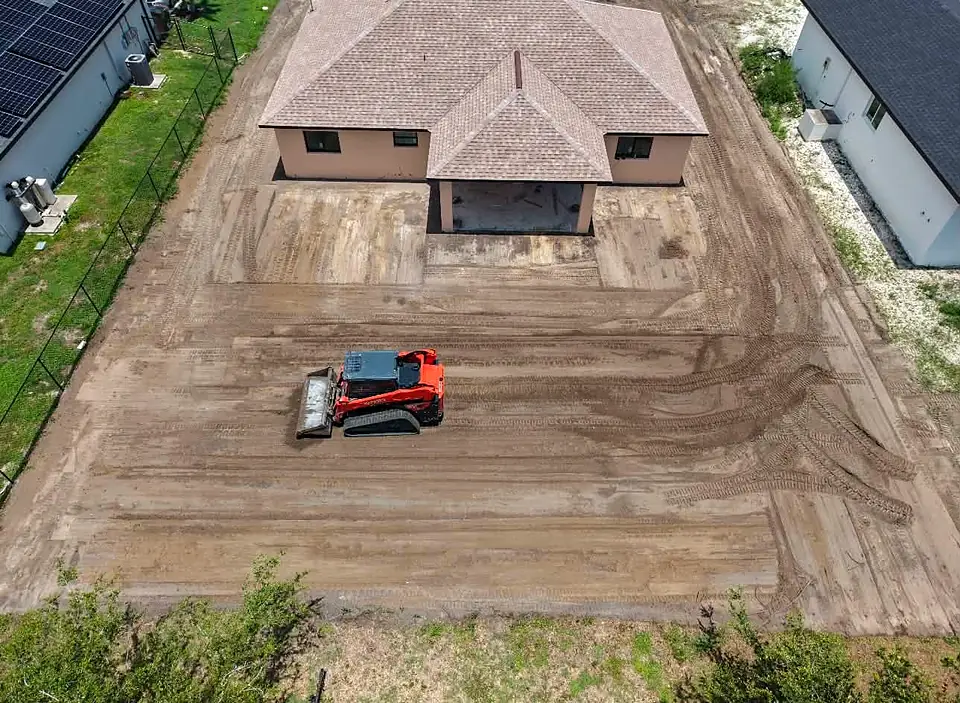
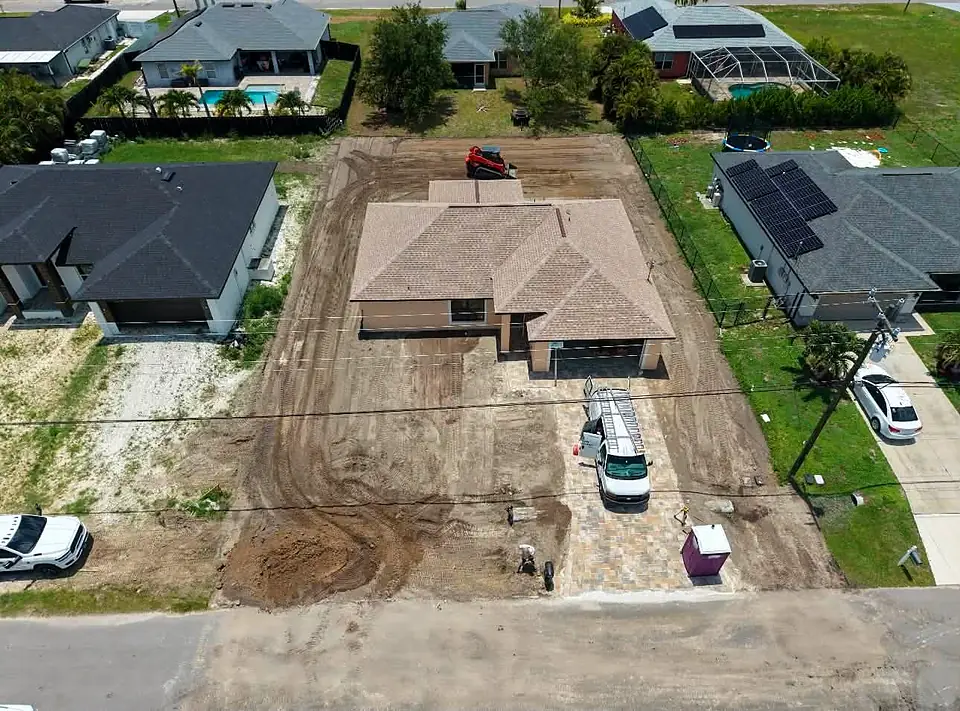
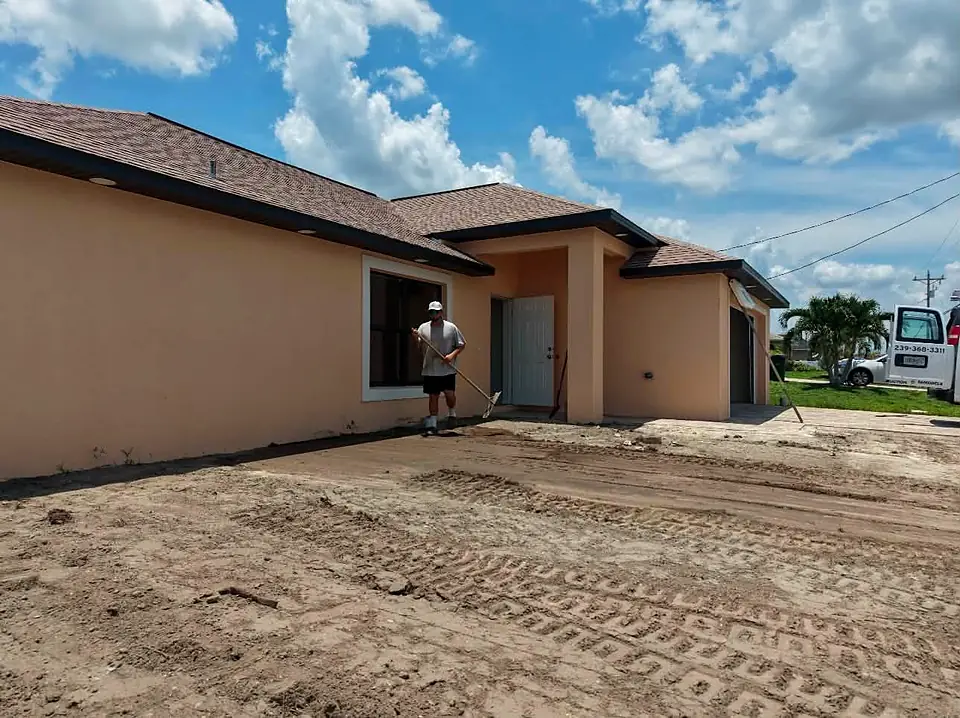
The City of Naples owner affidavit carries a rule people miss: under Ordinance 16-284, a vacant lot left after demolition has to be brought into compliance within 60 days, which means covered with grass or other living material. So when the house is gone, we pull the slab and footers, fill the holes in compacted layers, haul every load and grade the lot so it can take sod or seed. If a new home is next, the lot is ready for the surveyor.
The city also says a final inspection on the demolition permit has to happen before other permits are issued, so closing it out quickly keeps the rebuild moving. Send your address and a few photos through the contact page and we will tell you which permit path your lot is on.