
Why the calendar matters here
The National Weather Service puts the South Florida wet season from May 15 to October 15, and says 60 to 70 percent of the year's rain falls in it. Lee County puts hurricane season at June 1 to November 30. Put those together and a lot that drains poorly will show it from late May on, with tropical systems stacked on top of the daily storms.
The dry months are when drainage work goes smoothest. The ground is firm, loaded trucks do not rut the lot, fill dries to the right moisture for compaction, and new sod gets a chance to root before the heavy rain. A lot graded in March is usually holding up well by July. The same work squeezed in between August storms takes longer and often has to be touched up. If you know you have a problem spot, book it before spring ends.
Grade the ground away from the house
Water has to leave the foundation first. Cape Coral's inspection checklist for a certificate of occupancy asks for final grade that drains away from the foundation with at least 6 inches of fall in the first 10 feet, from the Florida Building Code, residential section R401.3. The same list caps slopes at 4:1, wants a swale at the side property lines, and checks that lot grading matches the approved plot plan.
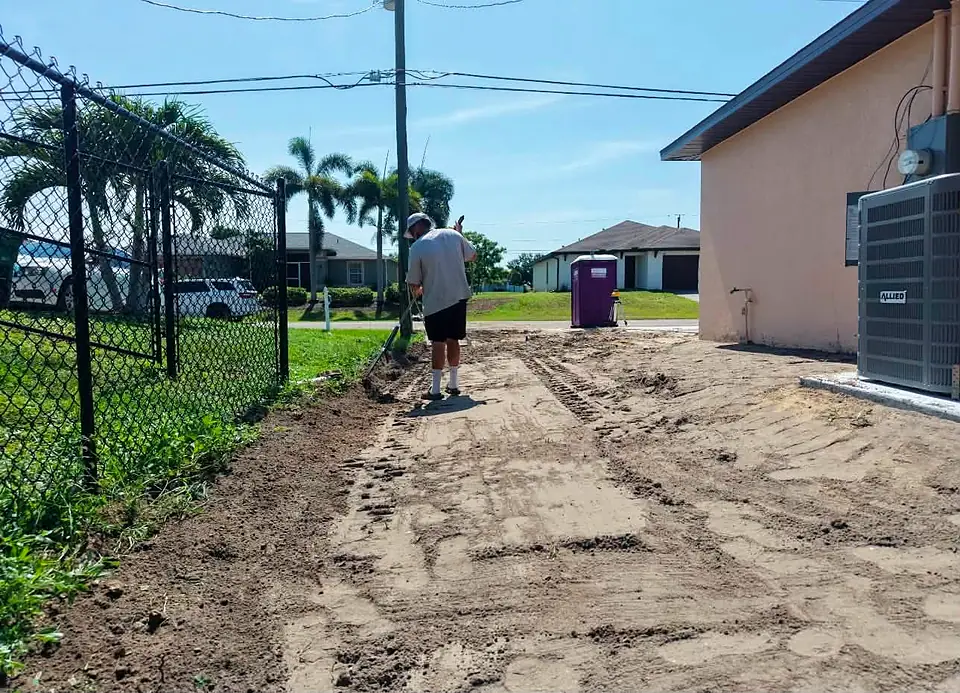
City code also says gutter downspouts must discharge toward the front or rear property lines, not onto the neighbor. If water sits against your slab or stem wall after a normal afternoon storm, the grade is wrong somewhere, and it will be worse in a tropical storm. Re-shaping a yard to get that fall back is everyday site grading and final grade work for us.
Swales carry water for the whole street
The swale along the road and the swales on your side lines are part of a drainage system shared with every lot downstream. In Cape Coral, the building permit holder gets the correct swale flow line elevations from the city, and the code says no excavated or construction material may restrict flow in the swale. Dumping fill into swales, drainage inlets or canals is prohibited. In unincorporated Lee County, state law and county ordinances bar owners from filling, diverting or blocking natural flowways.
Before the season, walk the swales. Look for sand washed in from a pad, grass clippings, piled brush or a parked trailer that has flattened the low point. Check that both ends of the driveway culvert are open and not half full of sand. A swale that holds water for days after a storm usually needs re-shaping to its permitted elevation, not filling in.
A vacant lot checklist before a storm
Vacant lots get forgotten until something blows off them. If you own one, go through it before June. Shape any fill or rock stockpile so it sheds water and keep it out of the swale. Pick up loose pipe, block, form boards and anything else that can fly. Make sure nothing on the lot is blocking the neighbor's drainage.
Bare sand washes away. A lot that was cleared and left open will lose material into the road and swale in heavy rain, so get it seeded, sodded or graded to hold together. Keep an eye out for burrowing owl burrows, which are protected whether a storm is coming or not. And do not let anyone use your lot as a dumping spot: Cape Coral warns residents never to put vegetation or debris on a vacant lot, even one next to their own home.
New-build lots in the middle of construction
A house under construction is the most vulnerable lot on the street. After stem wall backfill and before final grade, the pad usually sits well above the surrounding ground with loose sides, and rain carries that sand straight toward the swale and the neighbor's yard. A little temporary grading to turn runoff toward the swale, and keeping the culvert ends clear, saves a lot of cleanup.
Builders, if the house will be close to the certificate of occupancy in summer, plan the final grade and sod before the wettest stretch so the slope can root in. Open trenches for plumbing or electrical fill with water and cave in, so get them inspected and backfilled quickly. After a storm, Lee County is clear that sand should not be pushed into the road, storm drains or vacant lots. That counts as illegal dumping.
After the storm: what to check
Once it is safe to walk the lot, look for water standing longer than it normally does, swales that washed out or filled with sand, culvert ends buried or crushed, sand fans spread into the street, settled backfill along the foundation, and erosion at a canal bank or rip-rap edge. Take photos before anything gets moved.
Most of these are grading fixes: pull the sand back where it came from, re-cut the swale to its flow line, dress the backfill, and re-sod bare spots. Storm debris is a separate question with its own rules about who hauls what. Our guide on storm debris on private property covers that, and our storm cleanup and debris hauling page explains how we handle it.
Getting it done before June
The easiest time to fix drainage is when it is not raining. Call in the winter or early spring, and Chop will come out, look at how the lot sits against the road and the neighbors, check the fall away from the house, and walk the swales and culvert. You get a free quote that says what needs to move and where the water will go afterward.
We work for homeowners and for builders who need a lot ready for inspection. Reach us through the contact page, call (239) 560-2996, or call (305) 506-7420 for Spanish. Grading rules differ between Cape Coral, Lee County, Collier County and Charlotte County, so confirm the details for your lot with the local permitting office.
The short version
- The wet season runs May 15 to October 15, so drainage work is easiest in the dry months.
- Final grade should fall at least 6 inches in the first 10 feet away from the foundation.
- Swales are shared drainage: never fill them, keep them clear and cut to the city's flow line.
- Vacant and mid-construction lots need stockpiles shaped, bare sand covered and loose material picked up.
- After a storm, pull sand back onto the lot instead of pushing it into the road or a vacant lot.
Quick answers
When is the rainy season in Southwest Florida?
The National Weather Service defines the South Florida wet season as May 15 to October 15, when 60 to 70 percent of the year's rain falls. Hurricane season runs June 1 to November 30.
How much should the ground slope away from a house in Cape Coral?
Cape Coral's inspection checklist calls for final grade that drains away from the foundation with at least 6 inches of fall in the first 10 feet, and no slope on the lot steeper than 4:1.
Can I fill in the swale in front of my lot so it stops holding water?
No. The swale carries water for the street, and Cape Coral prohibits dumping fill into swales. A swale that holds water for days usually needs to be re-cut to the flow line elevation the city sets, or the culvert under the drive cleared or reset.
What should I do with my vacant lot before a hurricane?
Remove loose material, shape any stockpiles away from the swale, make sure the lot is not blocking a neighbor's drainage, and cover bare sand with seed or sod if it will sit for a while. Leave any owl burrows and their buffers alone.
See our site grading & final grade or call (239) 560-2996.